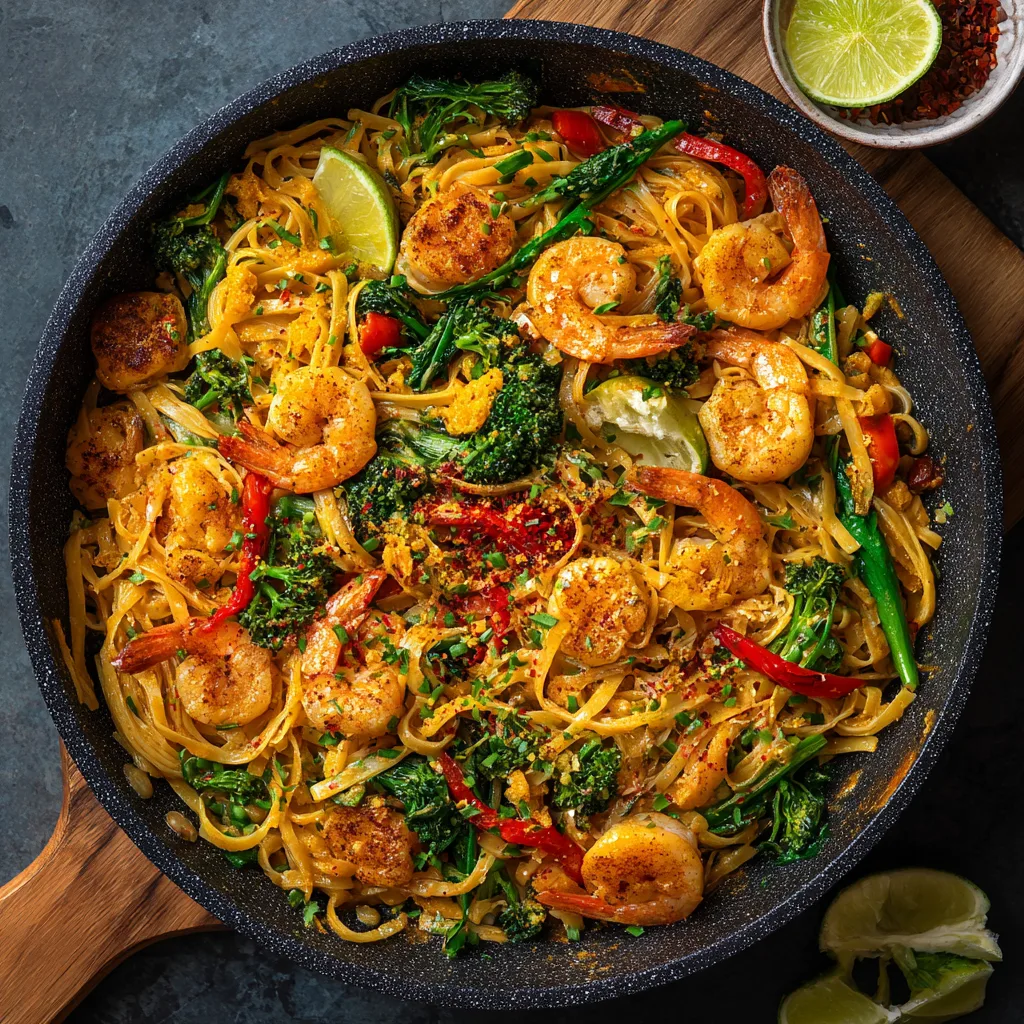
Fast Family Thai Noodles (One-Pan) transforms simple rice noodles, colorful vegetables, protein, and a quick homemade Thai sauce into a restaurant-quality meal ready in just 25 minutes—perfect for busy weeknights when everyone’s hungry and you need dinner on the table fast without sacrificing flavor or nutrition.
Chef Rachel created this fast family Thai noodles one-pan after realizing that authentic pad thai at home is actually easier and faster than waiting for delivery, with the added benefit of controlling ingredients and making it healthier for her family.
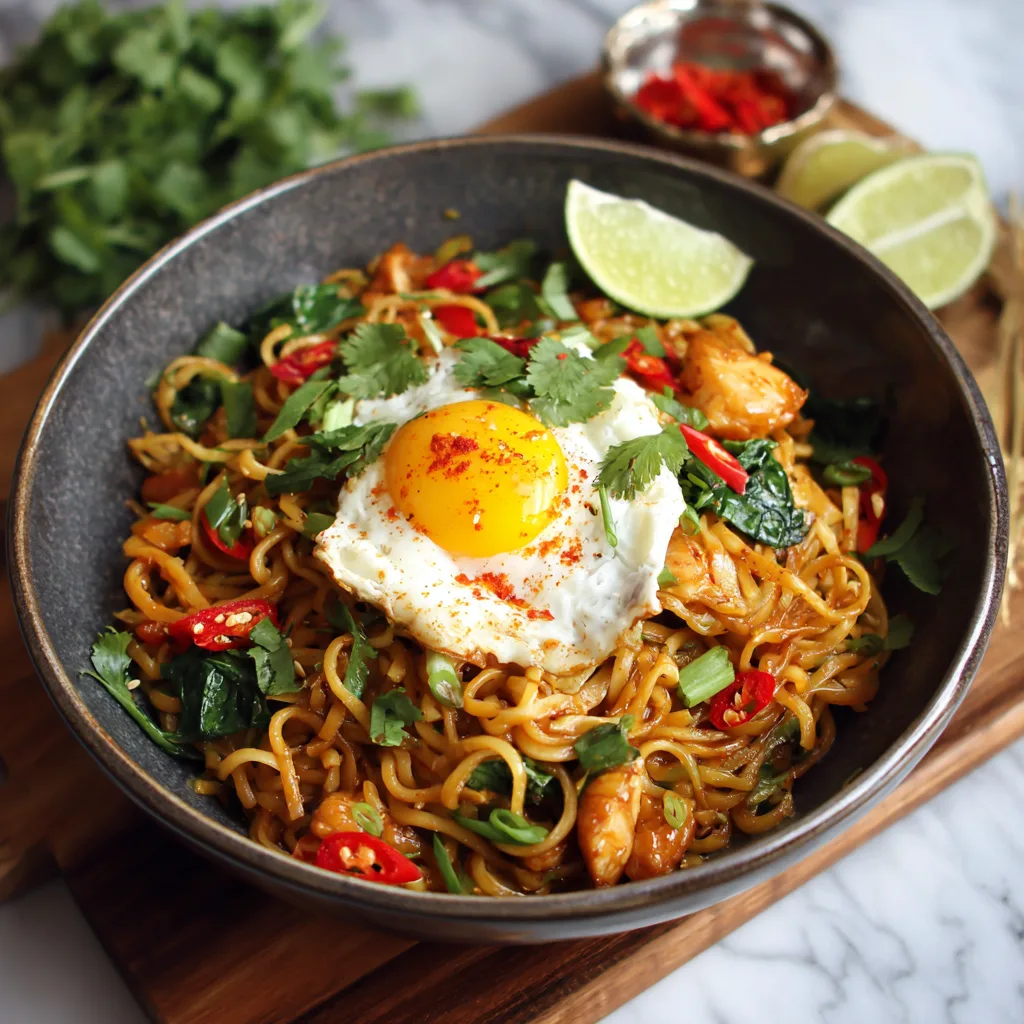
Fast Family Thai Noodles (One-Pan)
Ingredients
Equipment
Method
- Cook rice noodles according to package directions (usually 5-7 minutes). Drain and immediately drizzle with 1 tbsp sesame oil, tossing to coat. Set aside.
- While noodles cook, dice chicken, dice shallots, slice bell pepper, beat eggs, chop peanuts, green onions, and cilantro. Juice lime.
- In small bowl, whisk together coconut aminos, fish sauce, rice vinegar, lime juice, and sriracha. Set aside. (For peanut sauce variation, whisk all peanut sauce ingredients.)
- Heat large pot or 12-inch skillet over medium heat. Add ½ tbsp sesame oil. Pour in beaten eggs and scramble 1-2 minutes until cooked. Transfer to plate.
- Add ½ tbsp sesame oil to same pot. Add diced chicken and cook 8 minutes, stirring occasionally, until browned and cooked through (165°F). Transfer to plate with eggs.
- Add remaining 1 tbsp sesame oil if pot looks dry. Add diced shallots and cook 3 minutes until lightly browned. Add sliced bell pepper and cook 3-5 minutes until softened.
- Reduce heat to low. Add cooked noodles, chicken, and eggs back to pot. Pour prepared sauce over everything. Toss gently 1-2 minutes until noodles are evenly coated and everything is heated through.
- Remove from heat. Add chopped peanuts, green onions, and cilantro (reserve some for garnish). Toss once more. Divide among bowls and garnish with additional peanuts, green onions, cilantro, and lime wedges. Serve immediately.
Notes
Cook Time: 20 minutes
Total Time: 25 minutes
Servings: 3-4 Calories
Approximately 583 kcal per serving.
Protein
Approximately 20 g protein per serving from chicken, eggs, and peanuts.
She discovered that the key to weeknight-friendly Thai noodles is cooking everything sequentially in one large pot or skillet—scramble eggs first, brown protein, sauté aromatics and vegetables, then toss everything back in with cooked noodles and a simple sauce made from pantry staples. The method is brilliant: each component cooks perfectly without overwhelming you with multiple pans, and the final toss distributes that addictive sweet-salty-tangy-spicy Thai sauce throughout every strand of noodles.
Fresh lime juice, crushed peanuts, cilantro, and green onions added at the end bring brightness and crunch that make these noodles taste like your favorite Thai restaurant. These bold Thai flavors complement favorites like Gluten-Free Thai Curry (Easy and Nourishing), Mediterranean Grain Bowls, and One-Pot Moroccan Chicken Meal Prep for a full week of globally inspired meals.
Her friend Mery, who has three picky kids under ten, loves how these noodles disguise healthy vegetables in a kid-approved sweet peanut sauce that her children request multiple times per week—they call it “the yummy noodles” and actually eat bell peppers and scrambled eggs without complaint!
Summary
This fast family Thai noodles one-pan features tender rice noodles tossed with scrambled eggs, seared chicken or shrimp, bell peppers, and shallots in a homemade sauce combining coconut aminos, fish sauce, rice vinegar, lime juice, and sriracha for authentic Thai flavors in 25 minutes. Optional peanut sauce variation creates creamy Thai peanut noodles the whole family loves.
What makes this one-pan Thai noodles exceptional:
- 25-minute total time from start to finish, faster than delivery.
- One pot or skillet means minimal cleanup and maximum flavor.
- Customizable protein — use chicken, shrimp, tofu, or keep it vegetarian.
- Kid-approved — the sweet-savory sauce appeals even to picky eaters.
- Meal prep friendly — tastes great cold or reheated for 5 days.
The recipe serves 3-4 people generously, making it perfect for family dinners or leftovers for next-day lunches.
Equipment
For fast family Thai noodles one-pan, minimal equipment required:
- Large pot or deep skillet (12-inch works best).
- Wooden spoon or silicone spatula for stirring.
- Colander for draining noodles.
- Sharp knife and cutting board for prep.
- Measuring cups and spoons for sauce ingredients.
- Small bowl for mixing sauce.
That’s it! This truly is a one-pan meal with simple equipment.
Ingredients
For the Noodles and Base
- 8 ounces rice noodles or pad thai noodles (gluten-free if needed).
- 2 tablespoons sesame oil, divided.
- 2 large eggs, beaten.
- 1 lb boneless skinless chicken breast or thighs, diced (or 1 lb shrimp).
- ¼ cup shallots, diced (or red onion).
- 1 small red bell pepper, thinly sliced.
For the Thai Sauce
- 2 tablespoons coconut aminos (or soy sauce).
- 1 tablespoon fish sauce (omit if vegetarian).
- 2 tablespoons rice vinegar.
- 2 tablespoons fresh lime juice.
- 1 tablespoon sriracha (adjust for heat preference).
For Garnish and Serving
- ½ cup roasted peanuts, chopped, plus more for garnish.
- ¼ cup green onions, chopped, plus more for garnish.
- ¼ cup fresh cilantro, chopped, plus more for garnish.
- Lime wedges for serving.
- Optional: additional sriracha or chili garlic sauce.
Alternative: Thai Peanut Sauce Variation
- ¼ cup smooth peanut butter.
- ¼ cup soy sauce or coconut aminos.
- ¼ cup seasoned rice vinegar.
- 2 tablespoons brown sugar.
- 1 tablespoon sesame oil.
- 1 tablespoon sriracha.
- 1 teaspoon fish sauce (omit if vegetarian).
- 3 cloves garlic, minced.
- ¼ teaspoon ground ginger.
Ingredient notes:
- Rice noodles: Look for flat rice stick noodles or pad thai noodles in the Asian section. They’re naturally gluten-free.
- Sesame oil: Use toasted sesame oil for best flavor. It adds nutty richness.
- Protein flexibility: Swap chicken for shrimp (cook 3-5 minutes), firm tofu (bake first), or omit entirely.
- Fish sauce: Provides authentic Thai umami flavor but can be omitted for vegetarian version.
- Peanut butter: Use natural, no-sugar-added variety for healthiest option.
Directions
Follow these steps for perfect fast family Thai noodles one-pan in 25 minutes.
Step 1: Cook the noodles
Bring a large pot of water to boil. Cook rice noodles according to package directions (usually 5-7 minutes for pad thai noodles). Drain in colander and immediately drizzle with 1 tablespoon sesame oil, tossing to coat. This prevents sticking. Set aside. You can also rinse with cold water if making ahead.
Step 2: Prep all ingredients
While noodles cook, dice chicken into bite-sized pieces. Dice shallots and slice bell pepper thinly. Beat eggs in a small bowl. Chop peanuts, green onions, and cilantro. Juice lime. Having everything prepped (mise en place) makes the cooking process seamless since this recipe moves very quickly once you start.
Step 3: Make the Thai sauce
In a small bowl, whisk together coconut aminos (or soy sauce), fish sauce, rice vinegar, fresh lime juice, and sriracha until fully combined. Taste and adjust—add more sriracha for heat, more lime for brightness, or a pinch of brown sugar for sweetness. Set aside. For peanut sauce variation, whisk together all peanut sauce ingredients.
Step 4: Scramble the eggs
Heat a large pot or deep 12-inch skillet over medium heat. Add ½ tablespoon sesame oil. Once shimmering, pour in beaten eggs and scramble, stirring frequently, until just cooked through (about 1-2 minutes). Transfer scrambled eggs to a plate and set aside. Don’t worry about cleaning the pan—those eggy bits add flavor!
Step 5: Cook the protein
Add another ½ tablespoon sesame oil to the same pot over medium heat. Add diced chicken (or shrimp) and cook for about 8 minutes, stirring occasionally, until browned and fully cooked through. Chicken should reach 165°F internal temperature. If using shrimp, cook just 3-5 minutes until pink and opaque. Transfer cooked protein to the plate with eggs. If using tofu, bake separately at 425°F for 25 minutes until crispy, then add at the end.
Step 6: Sauté aromatics and vegetables
In the same pot (don’t clean it—you want those flavorful browned bits!), add remaining 1 tablespoon sesame oil if the pot looks dry. Add diced shallots and cook over medium heat for about 3 minutes, stirring frequently, until lightly browned and fragrant. The shallots will pick up the delicious browned bits from the chicken. Add sliced bell pepper and cook another 3-5 minutes until softened and slightly charred on the edges.
Step 7: Combine everything
Reduce heat to low. Add cooked noodles back to the pot with the vegetables. Add the cooked chicken (or shrimp) and scrambled eggs back in. Pour the prepared Thai sauce over everything. Using tongs or two wooden spoons, toss and fold everything together for 1-2 minutes until the noodles are evenly coated with sauce and everything is heated through. Work gently to avoid breaking the noodles. The heat from the noodles and vegetables will warm everything perfectly.
Step 8: Add fresh elements and serve
Remove pot from heat. Add chopped peanuts, green onions (reserve some for garnish), and cilantro. Toss one more time to distribute. Taste and adjust seasoning—add a splash more lime juice for brightness, extra sriracha for heat, or a drizzle of sesame oil for richness. Divide noodles among serving bowls and garnish generously with additional peanuts, green onions, cilantro, and lime wedges. Serve immediately while warm with extra sriracha on the side for those who want more heat.
Storage and reheating:
Store leftovers in an airtight container refrigerated for up to 5 days. These noodles are delicious served cold as a Thai noodle salad for lunch! To reheat, microwave for 2-3 minutes or warm in a skillet with a splash of water or broth to loosen the noodles. The sauce thickens as it sits, so add a little liquid when reheating. Some testers prefer adding extra peanut sauce to leftovers for maximum creaminess.
Tips and Variations
Protein Options
Shrimp: Use 1 lb peeled, deveined shrimp instead of chicken. Cook just 3-5 minutes in Step 5 until pink—don’t overcook or they’ll be rubbery.
Tofu: Use 14 oz extra-firm tofu, pressed and cubed. Bake at 425°F for 25 minutes for crispy texture, then add with noodles in Step 7.
Rotisserie chicken: Skip Step 5 entirely and use 2-3 cups shredded rotisserie chicken added in Step 7. Major time-saver!
Ground protein: Use 1 lb ground chicken or turkey instead of diced. Brown and crumble in Step 5, about 6-8 minutes.
Vegetarian: Omit protein and fish sauce, add extra vegetables like broccoli, snap peas, carrots, or edamame.
Vegetable Additions
Carrots: Add 1 cup julienned or shredded carrots with bell pepper for crunch and color.
Broccoli: Add 2 cups florets with bell pepper; they’ll steam-cook in the hot pan.
Snap peas or snow peas: Add 1-2 cups during the last 2 minutes for crisp-tender texture.
Bean sprouts: Traditional pad thai ingredient; add 1-2 cups in Step 7 for authentic texture.
Cabbage: Thinly slice 2 cups and add with bell pepper for volume and nutrition.
Mushrooms: Slice 8 oz mushrooms and sauté with shallots for umami depth.
Noodle Alternatives
Whole grain spaghetti: Use regular or whole grain pasta if you can’t find rice noodles. Cook according to package directions.
Ramen noodles: Discard seasoning packet and use just the noodles for quick option.
Udon noodles: Thick Japanese noodles create heartier dish.
Zucchini noodles: Use spiralized zucchini for low-carb, paleo version. Don’t boil—just toss with hot sauce in Step 7.
Shirataki noodles: Calorie-free option for keto diets; rinse well and don’t boil.
Sauce Customizations
Sweeter sauce: Add 1-2 tablespoons brown sugar or honey to balance acidity.
Extra creamy: Use the peanut sauce variation for rich, creamy noodles.
More tang: Increase rice vinegar and lime juice by 1 tablespoon each.
Spicier: Double the sriracha or add fresh Thai chilies or red pepper flakes.
Garlicky: Add 3-4 minced garlic cloves with shallots in Step 6.
Ginger kick: Add 1 tablespoon fresh grated ginger with shallots.
Kid-Friendly Modifications
Mild version: Omit sriracha entirely or reduce to 1 teaspoon.
No fish sauce: Skip it—kids often don’t like the fermented flavor.
Extra peanut butter: Double the peanut butter in sauce for kid-approved sweetness.
Hidden veggies: Finely mince vegetables so they’re less obvious.
Separate components: Serve noodles, protein, vegetables, and sauce separately so kids can build their own.
Serving Suggestions
Fried egg on top: Add a runny fried egg per bowl for richness and extra protein. The yolk creates a luxurious sauce!
Extra lime: Always serve with lime wedges—acid brightens every bite.
Crushed peanuts: Sprinkle generously for satisfying crunch and protein.
Fresh herbs: Use Thai basil instead of cilantro for more authentic flavor.
Chili oil: Drizzle with chili garlic oil for those who want extra heat.
Nutrition Facts
Estimated nutrition per serving (recipe makes 3-4 servings).
| Nutrient | Amount |
|---|---|
| Calories | 583 kcal |
| Protein | 20 g |
| Carbohydrates | 94 g |
| Fiber | 4 g |
| Total Fat | 13 g |
| Saturated Fat | 2 g |
| Cholesterol | 0 mg |
| Sodium | 1096 mg |
| Sugar | 10 g |
| Vitamin C | 2.6 mg |
| Calcium | 39 mg |
| Iron | 2.1 mg |
Nutritional Highlights
This fast family Thai noodles one-pan delivers impressive nutritional balance with 583 calories per serving, making it a satisfying meal that sustains energy without feeling heavy. The 20 grams of protein from chicken, eggs, and peanuts supports muscle maintenance and keeps you full for hours after eating.
Rice noodles provide 94 grams of carbohydrates, offering quick energy ideal for active families and athletes. While this is higher in carbs, they’re complex carbohydrates that digest steadily, especially when combined with protein and fat from eggs and peanut sauce. The 4 grams of fiber from vegetables and whole grain variations supports digestive health.
The healthy fats (13g total) come primarily from sesame oil, peanuts, and peanut butter—all plant-based sources providing heart-healthy unsaturated fats. These fats help your body absorb fat-soluble vitamins and create satisfying richness without excess saturated fat (just 2g per serving).
Fresh aromatics and sauce ingredients deliver more than flavor. Garlic supports cardiovascular health and immune function. Ginger aids digestion and has anti-inflammatory properties. Lime juice provides vitamin C (though modest at 2.6mg per serving) and enhances iron absorption. Sesame oil contains lignans with antioxidant properties.
The sodium content (1096mg per serving) is notable, coming primarily from soy sauce, fish sauce, and coconut aminos. Those watching sodium can reduce by using low-sodium versions of these ingredients or substituting coconut aminos (naturally lower in sodium) for soy sauce.
Dietitian Tips
For higher protein needs: Use 1½ lbs chicken instead of 1 lb to boost protein to 28-30g per serving. Add extra eggs (3-4 total) or top with additional crushed peanuts. Athletes and very active individuals will appreciate the extra protein for muscle recovery.
For blood sugar management: The combination of protein (20g) and fat (13g) helps moderate the blood sugar response to the high-carb noodles. Those managing diabetes can substitute half the rice noodles with spiralized zucchini noodles to reduce total carbs while maintaining volume. Increasing protein and vegetables while reducing noodles creates better blood sugar stability.
For weight management: At 583 calories per serving, this is a moderate-calorie meal. For lighter portions, reduce noodles to 6 oz and increase vegetables—bell peppers, broccoli, carrots, snap peas—to maintain volume and satisfaction while cutting 100-150 calories per serving. The protein and healthy fats still provide satiety.
For sodium reduction: The 1096mg sodium is high for one meal (nearly half daily limits). Use low-sodium soy sauce or coconut aminos, reduce or omit fish sauce, and skip added salt. This can reduce sodium by 300-400mg per serving. Those with hypertension should definitely make these modifications.
For gluten-free diets: This recipe is naturally gluten-free when using rice noodles and coconut aminos or gluten-free tamari. Verify all packaged ingredients are certified gluten-free if you have celiac disease. Many commercial soy sauces contain wheat, so coconut aminos is the safest choice.
For picky eaters: The customizable nature makes this recipe perfect for families with different preferences. Keep components separate and let family members build their own bowls, choosing their vegetables, protein, and sauce intensity. The sweet-savory peanut sauce variation is particularly kid-approved—many parents report their children eat vegetables they normally refuse when coated in peanut sauce!
FAQs – 6 Frequently Asked Questions
Q1: Can I use regular spaghetti or other pasta instead of rice noodles?
A: Absolutely! Regular spaghetti, whole grain spaghetti, linguine, or fettuccine all work beautifully in this recipe. Many testers actually prefer whole grain spaghetti because it provides more fiber and nutritional benefits while having familiar texture and flavor. Cook the pasta according to package directions, drain, and drizzle with sesame oil to prevent sticking, then proceed with the recipe exactly as written. The flavor will be slightly different than traditional pad thai made with rice noodles—pasta has a bit more chew and absorbs sauce differently—but it’s equally delicious and much easier to find in most grocery stores. Long noodles like spaghetti work best because they toss more easily with the sauce and vegetables than short pasta shapes like penne. Rice noodles are naturally gluten-free, but if that’s not a concern, pasta is a perfect budget-friendly substitute!
Q2: My noodles stuck together in a clumpy mess. How do I prevent this?
A: Sticky, clumped noodles are frustrating but easy to prevent! The key is immediately drizzling cooked, drained noodles with sesame oil (about 1 tablespoon) and tossing to coat every strand. The oil creates a barrier that prevents the starch on the noodle surface from causing them to stick together. Never let cooked noodles sit without oil—they’ll become a solid mass within minutes! Another trick: rinse cooked noodles briefly under cold water in the colander to wash away excess surface starch, then drizzle with oil. If you’re making the dish immediately, you can also add the noodles to the hot pan with vegetables while they’re still slightly warm and toss with sauce right away—the sauce itself will coat the noodles and prevent sticking. If your noodles did clump despite your best efforts, add them to the hot pan with a splash of hot water or broth and use tongs to gently separate them as they warm up. The added liquid will help loosen the starches.
Q3: Can I make this dairy-free and nut-free for allergies?
A: Yes on both counts! This recipe is already naturally dairy-free—there’s no butter, cream, cheese, or milk. For nut-free adaptation, simply omit the peanuts and peanut butter. Instead of peanut sauce, use the traditional pad thai sauce variation (coconut aminos, fish sauce, rice vinegar, lime, sriracha) which contains zero nuts. For the crunch that peanuts provide, substitute toasted sunflower seeds or pepitas (pumpkin seeds)—both are seeds, not nuts, and safe for most nut allergies. You can also add extra texture with bean sprouts, thinly sliced cabbage, or sesame seeds. If you’re making the peanut sauce variation and need it nut-free, substitute sunflower seed butter (like SunButter) in equal amounts for peanut butter. The flavor will be slightly different but still delicious! Always verify that your coconut aminos, fish sauce, and other packaged ingredients are processed in nut-free facilities if you have severe allergies.
Q4: How do I make this vegetarian or vegan?
A: Super easy! For vegetarian, omit the chicken and fish sauce. Add extra vegetables like broccoli, carrots, snap peas, mushrooms, and edamame to bulk up the dish. You can also add 14 oz baked crispy tofu for plant-based protein—press the tofu, cube it, toss with a bit of cornstarch and sesame oil, and bake at 425°F for 25 minutes until golden. For vegan, make the same modifications but also omit the scrambled eggs. Many vegans add extra-firm tofu scrambled with a pinch of turmeric (for yellow color) as an egg replacement. You can also simply increase vegetables and tofu without replacing the eggs—the dish is still substantial and delicious. Make sure your rice noodles don’t contain egg (most don’t), use vegan oyster sauce if adding any, and verify sriracha is vegan (most brands are). The peanut sauce variation is easily vegan—just omit the fish sauce.
Q5: This recipe seems complicated with so many steps. Can I simplify it for an even faster dinner?
A: Yes! While the recipe might look long, it’s actually quite simple since everything uses the same pot. But here are shortcuts: (1) Use pre-cooked protein: Buy rotisserie chicken, pre-cooked shrimp, or baked tofu and skip Step 5 entirely—just add it with noodles in Step 7. Saves 8-10 minutes! (2) Skip the eggs: If your family doesn’t care about eggs, omit them and save Step 4. (3) Use frozen stir-fry vegetables: Buy pre-cut frozen vegetable mixes and skip all the chopping—add frozen vegetables in Step 6 and cook until heated through. (4) Make sauce ahead: Whisk the sauce together earlier in the day or even the night before and store in the fridge. (5) Use pre-minced garlic and ginger from jars if you don’t mind less-fresh flavor. With these shortcuts, you can have dinner ready in 15 minutes! The beauty of this recipe is its flexibility—customize the effort level based on how much time and energy you have.
Q6: Can I double this recipe for meal prep or a crowd?
A: You can, but you’ll need to work in batches or use a very large pot/skillet. The issue with doubling noodle dishes is that too much food in the pan prevents proper browning and tossing—everything steams instead of sears. For best results when doubling, use two separate large skillets side-by-side, dividing all ingredients between them, or work in two batches using one skillet. Alternatively, cook all the components separately (noodles, scrambled eggs, protein, vegetables), then combine everything in a very large stock pot or even a roasting pan with the sauce. For meal prep specifically, this recipe works beautifully—make the full recipe, portion into 4 meal prep containers, and refrigerate for up to 5 days. The noodles actually taste great served cold as a Thai noodle salad, or reheat individual portions in the microwave. Many meal preppers make double batches on Sunday and eat these noodles for lunch all week. Just store the extra crushed peanuts, cilantro, and lime wedges separately and add them fresh when eating for maximum texture and brightness!
Conclusion
Fast family Thai noodles one-pan proves that restaurant-quality Thai food is not only possible at home but actually faster and easier than waiting for delivery. The brilliant one-pan method—cooking components sequentially in the same pot, then tossing everything together with a quick homemade sauce—delivers authentic Thai flavors in just 25 minutes without overwhelming you with complicated techniques or hard-to-find ingredients. The combination of tender rice noodles, protein, crisp vegetables, and that addictive sweet-salty-tangy-spicy Thai sauce creates a meal that satisfies cravings while being healthier and more budget-friendly than takeout.
These bold Thai flavors complement Chef Rachel’s other globally inspired recipes beautifully. She often rotates between these fast family Thai noodles, Gluten-Free Thai Curry (Easy and Nourishing), One-Pot Moroccan Chicken Meal Prep, and Mediterranean Grain Bowls to keep her weekly routine interesting without repeating cuisines. Her friend Mery, whose three kids under ten are notoriously picky eaters, calls this recipe her “secret weapon”—her children request “the yummy noodles” multiple times per week and actually eat bell peppers and eggs without complaint. She often makes a double batch on Sunday and enjoys leftovers cold for lunch all week.
The beauty of fast family Thai noodles one-pan lies in its incredible flexibility and forgiving nature. Use chicken, shrimp, tofu, or go vegetarian. Add whatever vegetables you have or need to use up. Make it spicy or mild. Use the traditional pad thai sauce or the creamy peanut sauce variation. Serve it hot, cold, or room temperature. The customizable nature means every family member can enjoy it exactly how they like it, making this the ultimate crowd-pleasing weeknight dinner that delivers bold Thai flavors, proper nutrition, and that cozy satisfaction that only comes from a big bowl of flavorful noodles loaded with vegetables and topped with crunchy peanuts and fresh herbs.
More recipes in mealzyt.com.