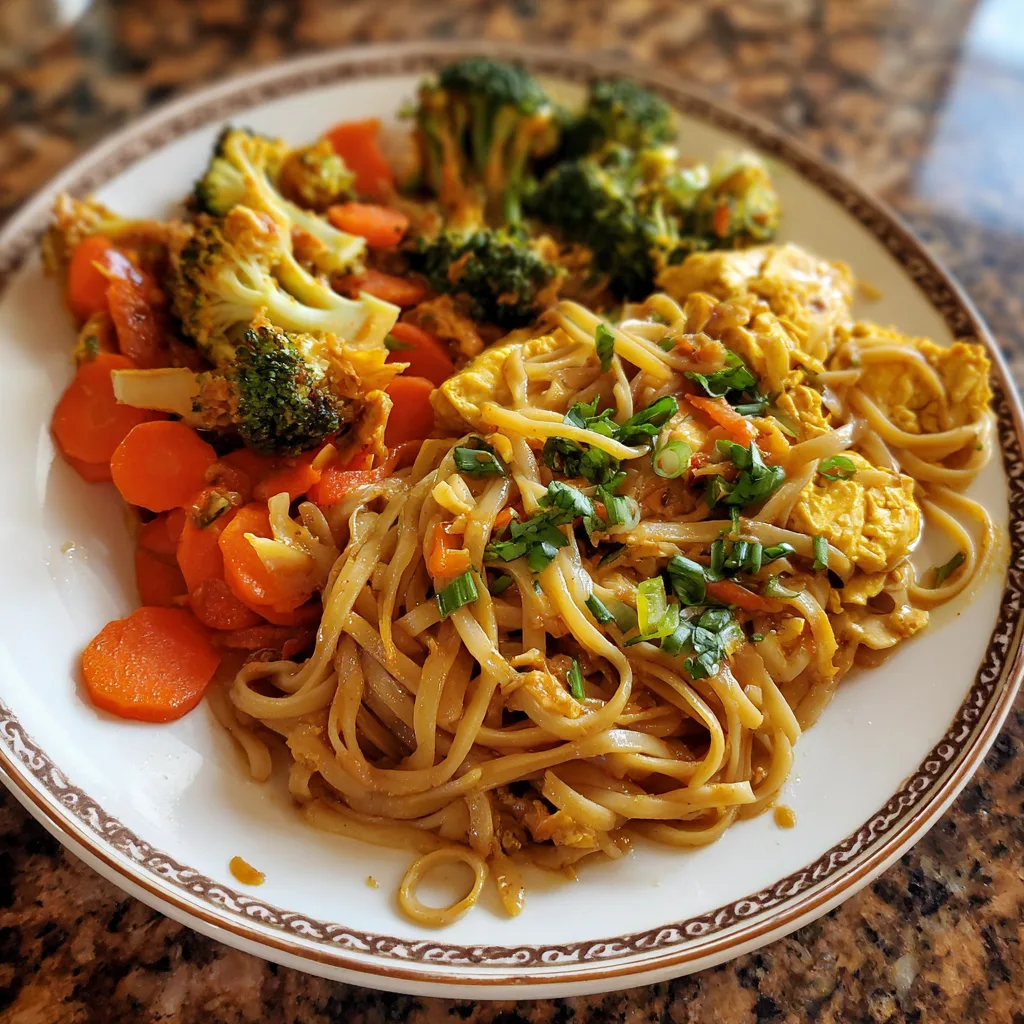
High-Protein Thai Noodle Dinner transforms tender rice noodles, lean protein, colorful vegetables, and creamy peanut sauce into a muscle-building meal delivering over 40 grams of protein per serving—perfect for athletes, fitness enthusiasts, and anyone seeking satisfying, nutrient-dense dinners that support active lifestyles without sacrificing the bold Thai flavors you crave.
Chef Rachel created this high-protein Thai noodle dinner after realizing that traditional pad thai, while delicious, often falls short on protein and relies too heavily on noodles and oil, leaving her hungry an hour later despite the calories.
Table
Table of Contents
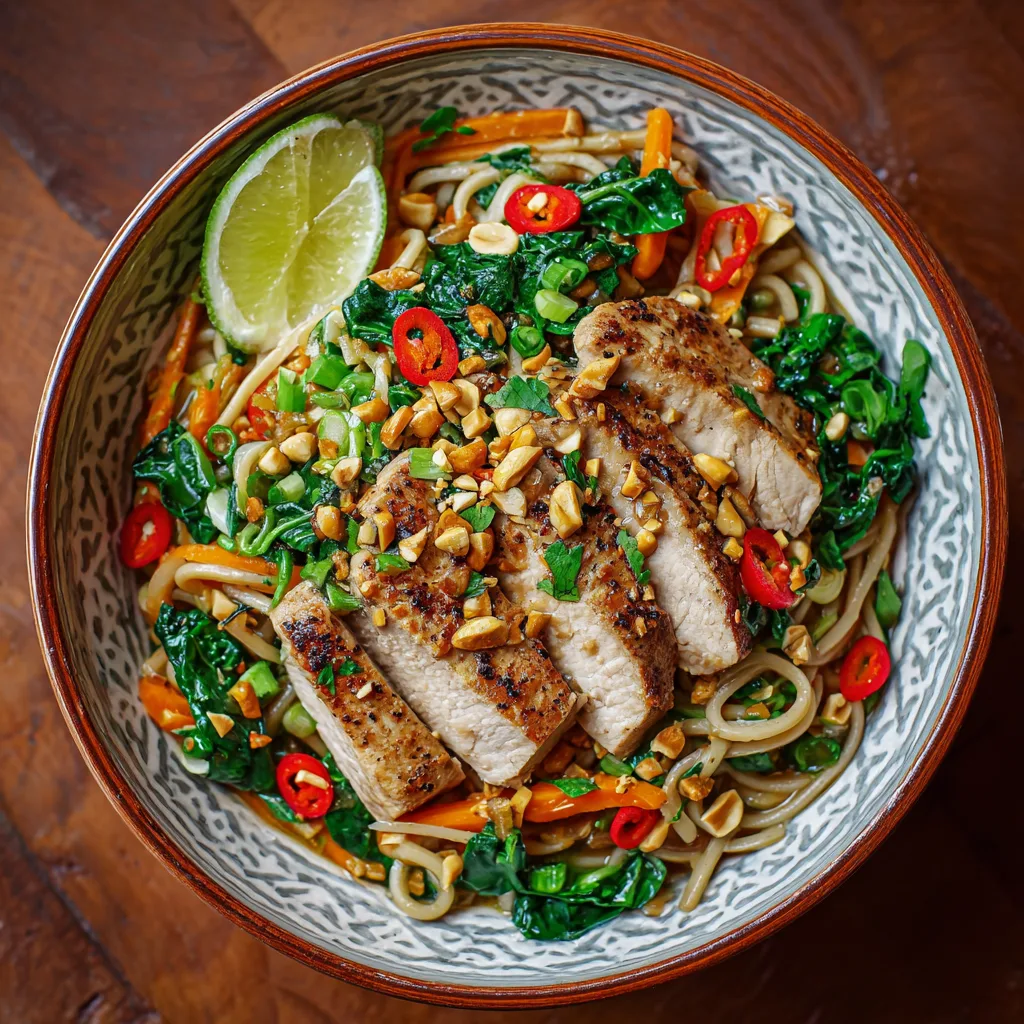
High-Protein Thai Noodle Dinner
Ingredients
Equipment
Method
- Cook rice noodles according to package directions. Drain, rinse with cold water, set aside. While noodles cook, thinly slice chicken, prep shrimp, whisk eggs, and prep all vegetables.
- Make peanut sauce: Whisk together peanut butter, tamari, rice vinegar, oyster sauce, dark soy sauce, honey, sriracha, white vinegar, garlic powder, and ginger. Add hot water gradually until pourable. Set aside.
- Optional: Velvet chicken by mixing sliced chicken with 1 tsp baking soda and 2 tbsp water. Let sit 15-20 minutes, rinse thoroughly, pat dry.
- Heat wok over high heat. Add ½ tsp oil. Add chicken in single layer, season with salt, white pepper, black pepper. Stir-fry 3-4 minutes until cooked through (165°F). Transfer to plate.
- Add another ½ tsp oil if needed. Add shrimp in single layer. Cook 1-2 minutes per side until pink. Transfer to plate with chicken.
- Reduce heat to medium-high. Pour whisked eggs into center. Let sit 10-15 seconds, then scramble 1 minute. Transfer to plate.
- Increase heat to high. Add garlic and broccoli stalks, stir-fry 1-2 minutes. Add carrots, bell pepper, onion, cabbage, broccoli florets. Stir-fry 2-3 minutes until crisp-tender. Add edamame, cook 1 minute.
- Reduce heat to medium. Add cooked noodles. Pour peanut sauce over everything. Toss gently 1-2 minutes until evenly coated.
- Add chicken, shrimp, and eggs back. Toss 1 minute until reheated. Taste and adjust seasoning.
- Divide between 2 bowls. Top with peanuts, green onions, cilantro, lime wedges, optional chilies. Serve immediately or cool for meal prep.
Notes
Cook Time: 10 minutes
Total Time: 20 minutes
Servings: 2 Calories
Approximately 729 kcal per serving.
Protein
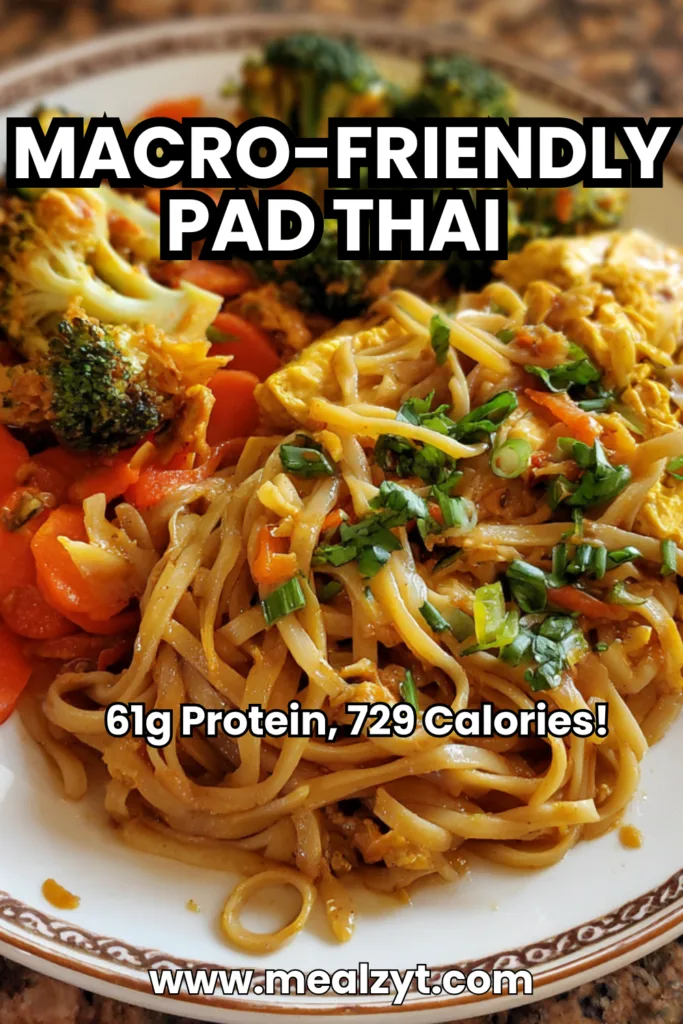
Approximately 61 g protein per serving from chicken, shrimp, eggs, edamame, and peanut sauce.
She discovered that maximizing protein while maintaining authentic Thai taste requires strategic ingredient choices: using both chicken breast and shrimp for lean double-protein, adding protein-rich edamame, incorporating eggs for additional protein and traditional pad thai authenticity, and balancing noodles with abundant fiber-rich vegetables.
The method is brilliant: stir-fry proteins first until perfectly cooked, remove them to prevent overcooking, then quickly cook vegetables and noodles before tossing everything back together with a protein-enhanced peanut sauce.
The result delivers 40-60g protein per serving—comparable to a protein shake but infinitely more satisfying and delicious. These macro-friendly Thai flavors complement favorites like Fast Family Thai Noodles (One-Pan), Gluten-Free Thai Curry (Easy and Nourishing), and Mediterranean Grain Bowls for a full week of globally inspired, protein-packed meals.
Her friend Mery, who lifts weights five days per week and struggles to meet her 140g daily protein goal, calls this recipe her “secret weapon”—she makes a triple batch every Sunday and eats it for lunch all week, easily hitting her protein targets while satisfying her Thai food cravings without the guilt of high-calorie takeout.
Summary
This high-protein Thai noodle dinner layers chicken breast, shrimp, scrambled eggs, and edamame with rice noodles and crisp vegetables, all coated in a protein-enhanced peanut sauce for 40-60g protein per serving depending on portions. The balanced macros—approximately 450 calories, 40g carbs, 40g protein, 12g fat—make this ideal for muscle building, weight management, and active lifestyles.
What makes this high-protein Thai noodles exceptional:
- 40-60g protein per serving from chicken, shrimp, eggs, edamame, and peanut butter.
- Under 20 minutes from start to finish for quick post-workout meals.
- Macro-friendly with balanced carbs, protein, and fats for fitness goals.
- Meal prep perfection — tastes great cold or reheated for 5 days.
- Customizable protein — use any combination of chicken, shrimp, tofu, or extra eggs.
The recipe serves 2 generously with restaurant-quality flavors and gym-worthy macros.
Equipment
For high-protein Thai noodle dinner, minimal equipment required:
- Large wok or 12-inch skillet (non-stick works best).
- Wooden spoon or silicone spatula for stir-frying.
- Large pot for cooking noodles.
- Colander for draining noodles.
- Sharp knife and cutting board for prep.
- Measuring cups and spoons for macros accuracy.
- Small bowl for mixing sauce.
Optional but helpful:
Ingredients
For the High-Protein Base
- 125g dried wide rice noodles (or 250g fresh rice noodles).
- 250g raw chicken breast, thinly sliced.
- 250g raw shrimp, peeled and deveined (about 8-10 large).
- 2 large eggs, whisked.
- 1 cup shelled edamame (fresh or frozen).
- 1 teaspoon oil (sesame, olive, or coconut).
For the Vegetables
- 2 cups Chinese broccoli or regular broccoli florets.
- 1 large carrot, julienned or ribboned.
- 1 red bell pepper, thinly sliced.
- 1 small red onion, sliced.
- 2 cloves garlic, minced.
- 1 cup shredded cabbage (or coleslaw mix).
For the High-Protein Peanut Sauce
- ½ cup natural peanut butter (adds 32g protein).
- 3 tablespoons tamari or low-sodium soy sauce.
- 1 tablespoon rice vinegar.
- 1 tablespoon oyster sauce.
- 1 tablespoon dark soy sauce (for color and depth).
- 1 tablespoon honey or zero-calorie sweetener.
- 2 teaspoons sriracha (adjust for heat preference).
- 1 teaspoon white vinegar or lime juice.
- 1 teaspoon garlic powder.
- 1 teaspoon ground ginger.
- ¼ cup hot water (to thin sauce).
For Garnish and Serving
- ¼ cup crushed roasted peanuts (adds 7g protein).
- ¼ cup chopped green onions.
- ¼ cup fresh cilantro, chopped.
- Lime or lemon wedges.
- Optional: chopped red chilies in vinegar.
Optional Protein Boost
- 1 scoop unflavored collagen peptides (adds 10g protein).
- Extra egg whites (3 whites = 10g protein).
Ingredient notes:
- Chicken breast: Leanest protein source with 31g protein per 100g. Thighs work but have more fat.
- Shrimp: Adds 24g protein per 100g with minimal fat and calories.
- Natural peanut butter: Use no-sugar-added variety for best macros. Provides healthy fats and 32g protein per ½ cup.
- Edamame: Plant-based protein (9g per cup) plus fiber.
- Fresh vs dried noodles: Fresh noodles have better texture but dried work fine and store longer.
Directions
Follow these steps for perfect high-protein Thai noodle dinner in under 20 minutes.
Step 1: Prep all ingredients (5 minutes)
Cook rice noodles according to package directions (usually 5-7 minutes for dried, 2-3 minutes for fresh). Drain, rinse with cold water to stop cooking, and set aside. While noodles cook, thinly slice chicken breast against the grain into bite-sized strips. Peel and devein shrimp if needed. Whisk eggs in a small bowl. Prep all vegetables—julienne carrot, slice bell pepper and onion thinly, mince garlic, separate broccoli into florets. Having everything prepped before heating the wok is essential for quick stir-frying success!
Step 2: Make the high-protein peanut sauce
In a small bowl, whisk together peanut butter, tamari, rice vinegar, oyster sauce, dark soy sauce, honey (or sweetener), sriracha, white vinegar, garlic powder, and ground ginger. Add hot water gradually, whisking constantly, until you reach a pourable but still thick consistency. The sauce should coat the back of a spoon. Taste and adjust—add more sriracha for heat, more sweetener for balance, or more tamari for saltiness. Set aside. For extra protein boost, whisk in unflavored collagen peptides.
Step 3: Optional but recommended: Velvet the chicken
For restaurant-quality tender chicken, use the Chinese velvet technique: mix sliced chicken with 1 teaspoon baking soda and 2 tablespoons water in a bowl. Let sit 15-20 minutes, then drain, rinse thoroughly under cold water, and pat completely dry. This breaks down proteins on the surface, creating incredibly tender chicken that stays juicy during high-heat stir-frying. While this adds time, it’s worth it for the texture! Skip if you’re in a hurry—the dish will still be delicious.
Step 4: Stir-fry the chicken
Heat wok or large skillet over high heat until smoking hot. Add ½ teaspoon oil and swirl to coat. Add sliced chicken in a single layer (work in batches if needed to avoid crowding). Season with salt, white pepper, and black pepper. Stir-fry for 3-4 minutes, tossing occasionally, until chicken is golden brown on edges and cooked through to 165°F. Transfer cooked chicken to a plate and set aside. Don’t clean the wok—those browned bits are flavor gold!
Step 5: Cook the shrimp
In the same wok over high heat, add another ½ teaspoon oil if needed. Add shrimp in a single layer and cook 1-2 minutes per side until pink and opaque. Don’t overcook or shrimp become rubbery! Transfer cooked shrimp to the plate with chicken.
Step 6: Scramble the eggs
Reduce heat to medium-high. If wok looks dry, add a tiny bit more oil. Pour whisked eggs into the center of the wok and let sit undisturbed for 10-15 seconds until edges begin to set. Using a spatula, gently scramble the eggs into soft curds, about 1 minute total. Transfer eggs to the plate with chicken and shrimp.
Step 7: Cook aromatics and vegetables
Increase heat back to high. Add minced garlic and broccoli stalks (if using Chinese broccoli) to the wok. Stir-fry 1-2 minutes until fragrant and slightly tender. Add carrots, bell pepper, red onion, cabbage, and broccoli florets. Stir-fry 2-3 minutes, tossing constantly, until vegetables are crisp-tender and slightly charred. Add edamame and cook 1 more minute. The vegetables should still have crunch—don’t overcook!
Step 8: Combine everything
Reduce heat to medium. Add cooked noodles to the wok with vegetables. Pour the prepared peanut sauce over everything. Using tongs or two spatulas, toss and fold gently for 1-2 minutes until noodles are evenly coated with sauce and warmed through. Work gently to avoid breaking noodles. The heat will thin the sauce and help it coat every strand beautifully.
Step 9: Add proteins back and final toss
Add the cooked chicken, shrimp, and scrambled eggs back to the wok. Toss everything together gently for 1 minute until proteins are reheated and evenly distributed. The eggs will break into smaller pieces and become incorporated throughout the dish. Taste and adjust seasoning—add more tamari for saltiness, squeeze of lime for brightness, or drizzle of sriracha for heat.
Step 10: Serve and garnish
Remove wok from heat. Divide noodles between two large bowls or meal prep containers. Top generously with crushed peanuts, chopped green onions, fresh cilantro, and lime or lemon wedges. For extra heat, add chopped red chilies in vinegar. Serve immediately while hot, or let cool completely before storing for meal prep. The presentation matters—make it look as good as it tastes!
Storage and meal prep:
Store in airtight containers refrigerated for up to 5 days. This dish is delicious served cold as a Thai noodle salad for lunch—the flavors actually deepen overnight! To reheat, microwave for 2-3 minutes or warm in a skillet with a splash of water to loosen the noodles. The sauce thickens significantly as it sits, so add a little water or extra peanut sauce when reheating for best texture. Many meal preppers make this on Sunday and enjoy it cold for lunch all week—the high protein keeps them full for hours!
Tips and Variations
Maximizing Protein Content
Extra chicken: Use 300-350g chicken breast instead of 250g to boost protein to 50-55g per serving.
Add more eggs: Use 3-4 eggs instead of 2 for additional 6-12g protein.
Collagen boost: Add 1-2 scoops unflavored collagen peptides to sauce for 10-20g extra protein.
Greek yogurt: Mix 2 tablespoons plain Greek yogurt into peanut sauce for creaminess and protein.
Double edamame: Use 2 cups edamame instead of 1 for extra 9g plant protein.
Egg whites: Add 3-4 egg whites with whole eggs for protein without extra fat.
Protein Source Variations
Tofu: Use 400g extra-firm tofu, pressed, cubed, and baked at 425°F for 25 minutes. Adds 40g protein per serving.
Turkey breast: Substitute ground turkey (99% lean) for chicken breast.
Chicken thighs: Use if you prefer more flavorful dark meat; adds slightly more fat but same protein.
Fish: Use firm white fish like cod or halibut cut into chunks.
Combination approach: Mix chicken breast, shrimp, AND tofu for ultimate protein loading (60g+ per serving).
Lower-Carb Modifications
Reduce noodles: Use only 60-80g dried noodles and double the vegetables.
Shirataki noodles: Use zero-calorie konjac noodles for ultra-low-carb option.
Zucchini noodles: Replace half the rice noodles with spiralized zucchini.
Kelp noodles: Another low-carb, low-calorie noodle alternative.
Spaghetti squash: Roast and use as noodle base for Paleo-friendly version.
Sauce Customizations
Almond butter: Substitute for peanut butter if nut allergies aren’t an issue; same protein content.
Sunflower seed butter: Use for nut-free version with similar macros.
PB2 powdered peanut butter: Use for lower fat version (reduces fat by 10g per serving).
Extra creamy: Add 2 tablespoons tahini for richness and additional protein.
Spicier: Double sriracha or add fresh Thai chilies or chili garlic paste.
Sweeter: Add extra honey or use coconut sugar for traditional Thai sweetness.
Vegetable Options
Snap peas: Add 1 cup during vegetable stir-fry for crunch.
Bean sprouts: Traditional pad thai ingredient; add raw as garnish.
Mushrooms: Slice 8 oz mushrooms for umami and extra nutrients.
Spinach: Add 2 cups in last minute of cooking for iron and vitamins.
Bok choy: Traditional Asian vegetable perfect for stir-frying.
Asparagus: Cut into 2-inch pieces and add with other vegetables.
Macro Tracking Tips
Weigh everything: Use a food scale for accurate macro tracking.
Log separately: Track noodles, proteins, sauce, and vegetables separately in your app.
Portion control: Divide into exactly 2 servings for consistent macros.
Adjust for goals: Increase protein for muscle building, reduce carbs for fat loss.
Calculate sauce macros: The peanut sauce alone provides ~200 calories and 15g protein per serving.
Nutrition Facts
Estimated nutrition per serving (recipe makes 2 servings).
| Nutrient | Amount |
|---|---|
| Calories | 729 kcal |
| Protein | 61 g |
| Carbohydrates | 84 g |
| Fiber | 9 g |
| Total Fat | 17 g |
| Saturated Fat | 4 g |
| Cholesterol | 239 mg |
| Sodium | 1371 mg |
| Sugar | 15 g |
| Vitamin A | 5811 IU |
| Vitamin C | 39 mg |
| Calcium | 122 mg |
| Iron | 3 mg |
Nutritional Highlights
This high-protein Thai noodle dinner delivers extraordinary protein content with 61 grams per serving—equivalent to about 2 chicken breasts or 8 egg whites, but infinitely more satisfying and delicious. This protein level supports muscle protein synthesis, helps maintain muscle mass during caloric deficits, and keeps you satisfied for 4-6 hours after eating—crucial for preventing snacking and supporting fitness goals.
The 729 calories per generous serving provide substantial energy for active individuals without being excessive. For context, this is comparable to many restaurant pad thai dishes but with triple the protein and half the fat. The balanced macros—84g carbs, 61g protein, 17g fat—align beautifully with flexible dieting and IIFYM (If It Fits Your Macros) approaches to nutrition.
Carbohydrates (84g) from rice noodles provide quick-digesting energy ideal for post-workout recovery when muscles need glycogen replenishment. The 9 grams of fiber from edamame, vegetables, and peanut butter supports digestive health and helps moderate blood sugar response to the high-carb content.
Healthy fats (17g total) come primarily from peanut butter and sesame oil—predominantly unsaturated fats that support heart health, hormone production, and absorption of fat-soluble vitamins. The minimal saturated fat (4g) and absence of trans fats make this heart-healthy despite the richness. Cholesterol (239mg) comes from eggs and shrimp—dietary cholesterol has minimal impact on blood cholesterol for most people.
The vitamin A content is exceptional (5811 IU, over 100% daily needs) from carrots, bell peppers, and broccoli, supporting immune function, vision, and skin health. Vitamin C (39mg) from vegetables acts as an antioxidant and enhances iron absorption. Iron (3mg) from chicken, shrimp, edamame, and fortified noodles supports oxygen transport—crucial for athletic performance.
Dietitian Tips for Fitness Goals
For muscle building: This recipe is perfect as-is for muscle gain with 61g protein per serving. Eat within 2 hours post-workout when muscles are primed for protein synthesis. Consider adding an extra 100g chicken breast to hit 70g+ protein if you’re a larger athlete or very active. Pair with a protein shake if trying to reach 180-200g daily protein.
For fat loss: Reduce rice noodles to 60-80g dried (instead of 125g) to drop calories to ~550 while maintaining the impressive 61g protein. This creates a higher protein-to-calorie ratio ideal for preserving muscle during a caloric deficit. The high protein and fiber naturally suppress appetite, making calorie restriction easier. Replace removed noodle volume with extra vegetables—zucchini, cabbage, broccoli—to maintain meal volume and satisfaction.
For lean gains: The recipe as written provides excellent macros for lean bulking—enough protein for muscle growth, sufficient carbs for energy and recovery, minimal unnecessary fats. The 729 calories fit easily into a 2500-3000 calorie muscle-building diet. Track macros carefully and adjust portions if your needs differ.
For pre-workout fuel: The balanced macros make this suitable 2-3 hours before training. The carbohydrates provide energy, protein prevents catabolism, and moderate fat doesn’t cause GI distress. For closer to workout (within 1 hour), reduce the fat by using PB2 powder instead of peanut butter.
For post-workout recovery: This is IDEAL post-workout nutrition with the perfect combination of protein for muscle repair and fast-digesting carbs for glycogen replenishment. The 3:1 carb-to-protein ratio is textbook perfect for recovery. Eat within 30-90 minutes post-exercise for optimal muscle protein synthesis.
For endurance athletes: The high carb content (84g) makes this perfect for endurance athletes who need sustained energy. The balanced macros prevent the energy crashes common with high-carb, low-protein meals. Marathon runners, cyclists, and triathletes will appreciate the protein supporting muscle recovery after long training sessions.
FAQs – 6 Frequently Asked Questions
Q1: How does this recipe deliver 61g protein per serving when most pad thai has only 15-20g?
A: The protein content comes from strategic layering of multiple protein sources in one dish. Traditional pad thai typically uses just one protein (chicken OR shrimp OR tofu) and focuses heavily on noodles. This recipe maximizes protein by using BOTH chicken breast (250g = ~31g protein) AND shrimp (250g = ~24g protein), plus 2 eggs (~12g protein), plus edamame (1 cup = ~9g protein), plus protein-rich peanut sauce (½ cup peanut butter = ~32g protein split between 2 servings = 16g per serving). When you add up all these sources: 31 + 24 + 12 + 9 + 16 = 92g total protein divided by 2 servings = 46g per serving from the base recipe. Additional protein comes from the noodles themselves (rice noodles contain some protein), tamari/soy sauce, and garnishes. Depending on exact brands and measurements, you’ll get 50-65g protein per serving. For athletes needing even more, you can add collagen peptides, extra egg whites, or increase chicken portions to hit 70g+ per serving!
Q2: Can I make this recipe lower in calories while keeping the high protein?
A: Absolutely! The beauty of this recipe is you can manipulate macros while maintaining protein. To reduce calories significantly while keeping 50-60g protein: (1) Cut noodles in half (use only 60g dried noodles instead of 125g) which saves ~200 calories. (2) Use PB2 powdered peanut butter instead of regular peanut butter in the sauce—provides nearly the same protein (6g per serving) but saves ~150 calories by removing most of the fat. (3) Double the vegetables to replace the volume of removed noodles—adds nutrients, fiber, and volume with minimal calories. (4) Use all chicken breast, no shrimp if budget is a concern (shrimp costs more and chicken has identical protein). With these modifications, you’ll create a ~450-500 calorie meal with 50g+ protein—incredible protein-to-calorie ratio perfect for aggressive fat loss while preserving muscle. The meal will still be huge, satisfying, and delicious!
Q3: I’m vegetarian/vegan. How can I get the same high protein without chicken and shrimp?
A: You can absolutely create a high-protein plant-based version! For vegetarian, use: 400g extra-firm tofu (pressed, cubed, baked at 425°F for 25 minutes for crispy texture) = ~40g protein. Keep the 2 eggs = 12g protein. Use 2 cups edamame instead of 1 cup = 18g protein. Add ½ cup hemp hearts mixed into the dish = 15g protein. Total: 85g protein divided by 2 servings = 42g per serving, plus protein from peanut sauce brings you to ~55g per serving. For vegan, omit eggs and oyster sauce. Use: 400g baked tofu, 2 cups edamame, ½ cup hemp hearts, ½ cup nutritional yeast stirred into sauce (adds cheesy flavor + 8g protein), and consider adding a scoop of vegan protein powder to the sauce. With strategic combinations, you can easily hit 45-50g protein per vegan serving—impressive for plant-based eating and sufficient for muscle building!
Q4: Why is the sodium so high (1371mg), and how can I reduce it for blood pressure concerns?
A: The high sodium comes primarily from four sources: tamari/soy sauce, oyster sauce, dark soy sauce, and fish sauce—all traditional Thai flavor bases. To reduce sodium dramatically while maintaining Thai flavor: (1) Use low-sodium soy sauce (saves ~300mg per serving). (2) Reduce or omit dark soy sauce—it’s mainly for color, not essential flavor (saves ~200mg). (3) Use mushroom “oyster” sauce instead of regular oyster sauce (often lower sodium). (4) Omit fish sauce and increase lime juice and rice vinegar for tangy flavor without sodium. (5) Rinse cooked noodles under cold water to wash away surface salt if you’re extremely sodium-sensitive. With these modifications, you can reduce sodium to ~600-700mg per serving—much more reasonable for those watching blood pressure. Remember that if you’re working out intensely and sweating, you actually need more sodium than sedentary people, so the original recipe may be fine for very active individuals. As always, consult your doctor if you have specific medical sodium restrictions!
Q5: How accurate are these macros, and do I need to weigh everything for meal prep?
A: The macros listed are quite accurate when you follow the recipe precisely and divide into exactly 2 servings. For casual eating, you don’t need to obsess over weighing—just follow volume measurements and you’ll be close enough. However, for serious fitness goals, bodybuilding prep, or precise macro tracking, YES, you should weigh proteins raw using a food scale. Chicken breast varies significantly in protein content by brand (chicken breast is ~31g protein per 100g, but can range 28-33g depending on moisture content). Shrimp varies even more (24g protein per 100g). Peanut butter is incredibly calorie-dense, so being off by even 1 tablespoon adds 95 calories and 8g fat. For meal prep consistency, weigh your raw chicken breast (should be exactly 250g per batch), weigh shrimp (250g), measure peanut butter by weight not volume (63g = ½ cup), and weigh cooked noodles if you’re very precise. Log everything in MyFitnessPal or similar app. The initial effort of weighing teaches you what portion sizes look like, and soon you’ll be able to eyeball accurately!
Q6: Can I prep this ahead for the entire week, and will the texture hold up?
A: Yes, this is one of the BEST meal prep recipes because the texture and flavor actually improve after a day in the fridge! Make a double or triple batch on Sunday and portion into 4-6 containers. The noodles will absorb more sauce overnight and become even more flavorful. The vegetables will soften slightly but maintain good texture if you don’t overcook them initially—keep them crisp-tender when stir-frying. Store in airtight containers refrigerated for up to 5 days. Many people actually prefer this dish cold straight from the fridge as a Thai noodle salad—no reheating needed! The cold peanut sauce firms up slightly and coats the noodles beautifully. If you prefer it hot, microwave for 2-3 minutes or warm in a skillet, adding a splash of water or extra peanut sauce to loosen the noodles. Store extra crushed peanuts, cilantro, and lime separately and add fresh when eating for maximum texture and brightness. The high protein keeps you full for 4-6 hours, making this perfect for workplace lunches when you need sustained energy without afternoon crashes!
Conclusion
High-protein Thai noodle dinner proves that building muscle and supporting fitness goals doesn’t require bland chicken and broccoli—you can enjoy bold, craveable Thai flavors while hitting impressive protein targets that support your training. The strategic combination of chicken breast, shrimp, eggs, edamame, and protein-rich peanut sauce delivers 61 grams of protein per serving—more than most protein shakes but infinitely more satisfying and delicious. The balanced macros make this perfect for muscle building, fat loss, athletic performance, or simply feeling satisfied and energized throughout busy days.
These macro-friendly Thai flavors complement Chef Rachel’s other globally inspired recipes beautifully. She often rotates between this high-protein Thai noodle dinner, Fast Family Thai Noodles (One-Pan), Gluten-Free Thai Curry (Easy and Nourishing), and Mediterranean Grain Bowls to keep her weekly meal prep interesting while consistently hitting her protein goals. Her friend Mery, who competes in CrossFit and struggles to eat enough protein to support her training, calls this recipe her “game-changer”—she makes a triple batch every Sunday and enjoys it for lunch all week, easily meeting her 140g daily protein target without force-feeding herself protein shakes or eating dry chicken breasts.
The beauty of high-protein Thai noodle dinner lies in its incredible versatility and customization for individual fitness goals. Training for a marathon and need more carbs? Add extra noodles. Cutting for a bodybuilding show and need lower calories? Reduce noodles and increase vegetables. Building muscle and need even more protein? Add extra chicken, more eggs, or collagen peptides to the sauce. Vegetarian or vegan? Swap proteins for tofu, tempeh, and edamame. The macro-friendly approach means you can enjoy restaurant-quality Thai food that actually supports your goals rather than derailing them, creating the sustainable, enjoyable eating pattern that leads to long-term success in fitness and health.
More recipes in mealzyt.com.