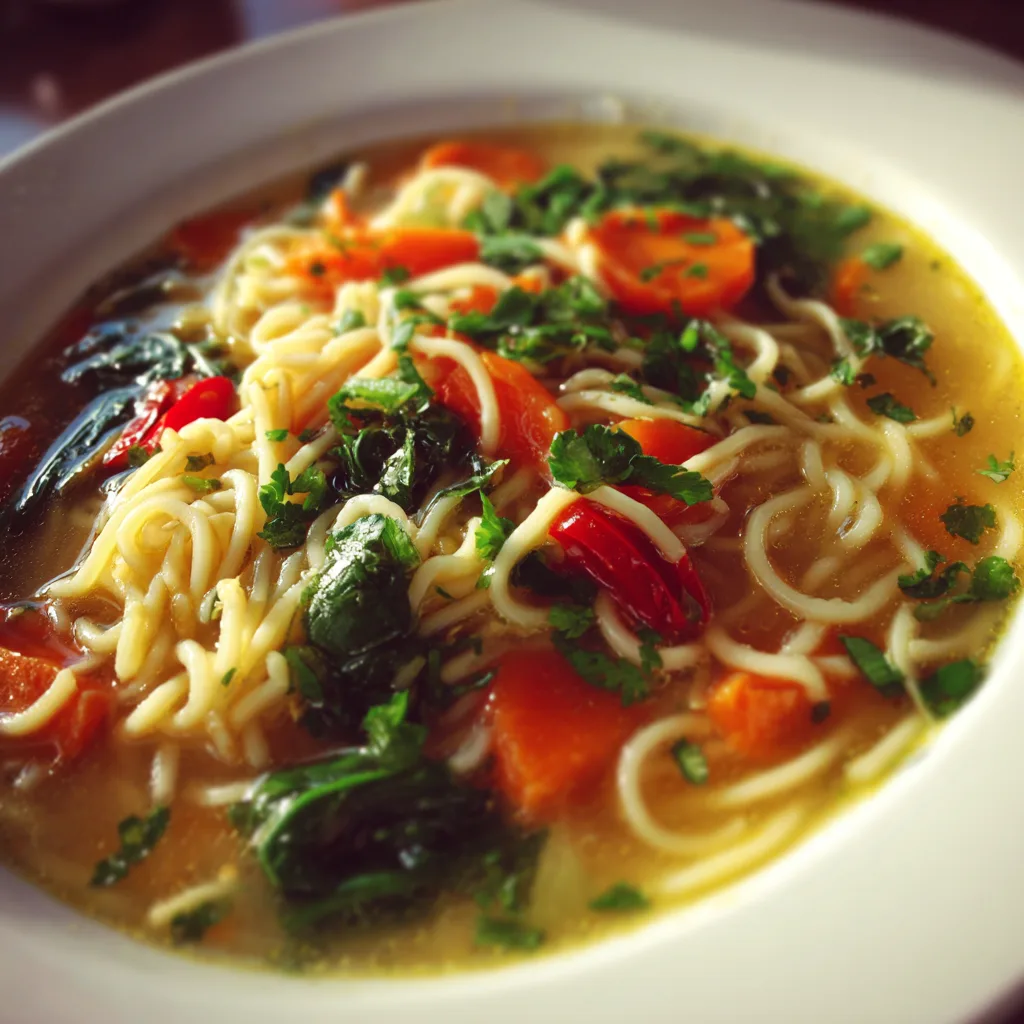
Easy Thai Noodle Soup for Weeknights is a phenomenally flavorful, 30-minute meal that combines tender noodles with colorful vegetables in a comforting, aromatic broth made from red curry paste, coconut milk, fresh ginger, garlic, and fish sauce—all cooked together in one pot for incredible flavor with minimal cleanup.
Chef Rachel developed this streamlined version after years of ordering Thai noodle soup at restaurants and realizing she could create an even better version at home that was faster, healthier, and completely customizable to her family’s tastes.
Easy Thai Noodle Soup for Weeknights
Ingredients
Equipment
Method
- Heat oil in large pot over medium heat. Add onions, bell pepper, and carrots. Cook until tender, about 5-7 minutes.
- Stir in garlic, ginger, and red curry paste. Cook until fragrant, about 1 minute, stirring frequently.
- Add broth, coconut milk, and fish sauce. Season with salt and pepper. Bring to simmer and cook uncovered 5 minutes.
- If using mushrooms, add now and simmer 3-4 minutes until tender.
- Add noodles and cook until tender (3-4 minutes for ramen, 4-5 minutes for rice noodles, or according to package directions).
- Remove from heat. Stir in lime juice and cilantro. Taste and adjust seasoning.
- Ladle into bowls. Top with additional cilantro, lime wedges, green onions, peanuts, and sriracha if desired.
-
Notes
Calories
Approximately 307 kcal per serving without added protein (4 servings) Protein
Approximately 5 g protein per serving from noodles and vegetables
The genius of this easy Thai noodle soup lies in how it delivers complex, restaurant-quality flavors with pantry staples and straightforward technique—no specialty equipment, no hard-to-find ingredients, just bold Thai flavors in a cozy, satisfying bowl. Unlike complicated multi-step Thai recipes, this weeknight version streamlines everything without sacrificing any of the sweet, spicy, tangy, and savory balance that makes Thai food so crave-worthy.
Chef Rachel’s friend Mery, who spent months backpacking through Thailand eating noodle soup at every street stall she encountered, taste-tested this recipe and declared it “shockingly close to authentic”—the creamy coconut broth, the perfectly tender noodles, the bright lime finish all hit the right notes. Whether you need a quick weeknight dinner, a comforting meal on a chilly evening, or an impressive dish that tastes far more complicated than it is, this Thai noodle soup for weeknights delivers every single time.
For more quick Thai soups, explore our Thai Curry Noodle Bowls in One Pot or try our Thai Coconut Curry Noodles (One-Pot) for similar flavors.
Summary
This Easy Thai Noodle Soup for Weeknights combines your choice of ramen or rice noodles with vegetables like onions, bell peppers, carrots, and mushrooms in a creamy, aromatic broth made from chicken or vegetable broth, coconut milk, red curry paste, fish sauce, fresh ginger, and garlic—topped with fresh cilantro and lime juice for brightness. The result is a complete meal ready in just over 30 minutes that rivals your favorite Thai restaurant.
Why this Easy Thai Noodle Soup works:
- Faster than takeout—on the table in 30 minutes from start to finish!
- The broth is incredibly flavorful—red curry paste provides instant depth
- One pot from start to finish—minimal cleanup for maximum flavor
- Endlessly customizable—works with any vegetables, proteins, and noodles you have
- Perfect balance of flavors—sweet, spicy, tangy, and savory all in harmony
- Meal prep champion—leftovers taste even better the next day!
- Family-friendly—even picky eaters ask for seconds!
The key is blooming the curry paste with aromatics before adding liquids—this releases essential oils and creates depth you simply can’t achieve by dumping everything in at once.
Equipment
Essential tools for making Easy Thai Noodle Soup:
- Large pot or Dutch oven – For cooking everything together in one pot
- Sharp chef’s knife – For chopping vegetables and mincing aromatics
- Cutting board – For prep work
- Measuring cups and spoons – For precise ratios
- Wooden spoon or silicone spatula – For stirring
- Ladle – For serving into bowls
- Box grater or microplane – For grating fresh ginger
Optional but helpful:
- Small prep bowls for organizing ingredients (mise en place)
- Tongs for tossing noodles
- Vegetable peeler for julienning carrots
Ingredients
For the Easy Thai Noodle Soup for Weeknights:
Soup Base:
- 2 tablespoons avocado oil or olive oil
- ½ cup diced yellow onion
- ½ cup diced red bell pepper
- ½ cup diced carrots
- 8 oz sliced mushrooms (crimini or shiitake)
- 3 cloves garlic, minced
- 1 tablespoon freshly grated ginger
- ¼ cup red curry paste
- 6 cups chicken broth or vegetable broth
- 1 can (14 oz) full-fat coconut milk
- 3 tablespoons fish sauce
- Salt and pepper to taste
Noodles:
Finishing Touches:
- 1 tablespoon fresh lime juice, plus more to taste
- ½ cup fresh chopped cilantro, plus more for serving
Garnishes:
- Lime wedges
- Fresh cilantro leaves
- Sliced green onions
- Chopped peanuts
- Sriracha or chili oil for extra heat
Optional Add-ins:
- 1-2 cups protein (chicken, shrimp, or tofu)
- Additional vegetables (bok choy, spinach, bean sprouts, zucchini)
Ingredient notes:
- Red curry paste: Thai Kitchen brand recommended; strength varies by brand
- Coconut milk: Full-fat creates richest broth; lite works but will be thinner
- Noodles: Ramen (discard seasoning packet) or pad thai-style rice noodles work best
- Fish sauce: Essential for umami depth—substitute extra soy sauce if needed
- Fresh ginger: Much better than dried or jarred; use a spoon to peel easily
Directions
Step 1: Sauté the vegetables
Heat 2 tablespoons of oil in a large pot or Dutch oven over medium heat. Once hot, add the diced onions, red bell pepper, and carrots. Cook until tender, about 5-7 minutes, stirring occasionally. The vegetables should soften and the onions should become translucent. This initial sautéing develops sweetness and depth.
Step 2: Add aromatics and curry paste
Stir in the minced garlic, freshly grated ginger, and red curry paste. Cook until fragrant, about 1 minute, stirring frequently so the garlic doesn’t burn. This step is crucial—cooking the curry paste with the aromatics releases essential oils that create authentic Thai flavor. You’ll smell an incredible aroma when it’s ready.
Step 3: Build the broth
Add the chicken broth (or vegetable broth for vegetarian), coconut milk, and fish sauce to the pot. Season with salt and pepper to taste. Stir everything together, scraping any curry paste stuck to the bottom of the pot. Bring the mixture to a simmer over medium-high heat. Once simmering, let it cook uncovered for 5 minutes to allow all the flavors to meld together.
Step 4: Add mushrooms
If using mushrooms, add them now and let them simmer in the broth for 3-4 minutes until they become tender and have released their moisture. Mushrooms add wonderful umami depth and meaty texture to the soup.
Step 5: Cook the noodles
Add your noodles to the simmering broth and cook until tender. Cooking time varies by noodle type: ramen noodles typically take 3-4 minutes, rice noodles take 4-5 minutes, check your package directions. Stir occasionally to prevent noodles from clumping together. The noodles should be tender but not mushy.
Step 6: Finish with bright flavors
Remove the pot from heat. Stir in 1 tablespoon of fresh lime juice and ½ cup chopped cilantro. Taste the broth and adjust seasoning as needed—add more fish sauce for saltiness, lime juice for tang, or a pinch of sugar if it needs sweetness to balance the spice.
Step 7: Serve immediately
Ladle the soup into bowls, making sure each serving gets plenty of noodles, vegetables, and broth. Top with additional fresh cilantro, lime wedges for squeezing, sliced green onions, and chopped peanuts. Serve with sriracha or chili oil on the side for those who want extra heat.
Adding Protein
For Thai Chicken Noodle Soup:
- Add small cubes of raw chicken breast to the soup at the same time as the vegetables in step 1
- The chicken will cook completely in the simmering broth (about 10-12 minutes total)
- Alternatively, add pre-cooked shredded rotisserie chicken in the last 2-3 minutes just to heat through
For Shrimp:
- Add raw shrimp in the last 3-4 minutes of cooking
- Cook just until pink and opaque
For Tofu:
- Pan-fry cubed extra-firm tofu separately until crispy
- Add to bowls when serving
Pro cooking tips:
- Bloom the curry paste—cooking it with aromatics releases essential oils
- Don’t overcook the noodles—they’ll continue softening in the hot broth
- Add lime juice at the end—cooking it diminishes brightness
- Store noodles separately—prevents sogginess if meal prepping
- Adjust seasoning—balance sweet, salty, spicy, tangy to your taste
Tips and Variations
Customizing Your Easy Thai Noodle Soup
Noodle options:
- Ramen noodles (recommended): Quick-cooking egg noodles—discard seasoning packet
- Rice noodles: Pad thai-style rice stick noodles work great
- Avoid ultra-thin noodles: Vermicelli becomes too soft and mushy
- Lo mein or udon: Thicker noodles create heartier soup
- Soba noodles: Buckwheat noodles add nutty flavor
- Zucchini noodles: For low-carb option—add in last 2 minutes only
Protein additions:
- Chicken: Raw cubes added with vegetables; rotisserie chicken added at end
- Shrimp: Add raw shrimp in last 3-4 minutes, cook until pink
- Tofu: Cube and pan-fry separately, add when serving
- Tempeh: Crumble and cook with vegetables
- Eggs: Top each bowl with soft-boiled or fried egg
- Meatballs: Add pre-cooked Thai-style chicken or pork meatballs
Vegetable variations:
- What’s used: Onions, bell peppers, carrots, mushrooms
- Also great: Baby bok choy, spinach, bean sprouts, zucchini, broccoli, cauliflower
- Leafy greens: Add in last 2 minutes to wilt
- Snow peas or snap peas: Add in last 3 minutes for crunch
- Thai eggplant: Traditional in Thai curries—add early with carrots
Adjusting heat level:
- Mild: Use only 2 tablespoons curry paste
- Medium: Use ¼ cup curry paste as written
- Spicy: Use ⅓ cup curry paste or add 1-2 tablespoons sriracha
- Extra spicy: Top with fresh sliced jalapeños or Thai bird chilies
- Serve heat on the side: Let diners add their own sriracha or chili oil

Making it creamier:
- Use coconut cream instead of coconut milk
- Add extra ½ can coconut milk
- Stir in 2-3 tablespoons peanut butter with coconut milk
- Use full-fat coconut milk rather than lite
Making it soupier:
- Add extra 1-2 cups broth
- Use more liquid and fewer noodles
- Add broth at the end to desired consistency
Making it healthier:
- Use lite coconut milk to reduce calories and fat
- Increase vegetable content to 3-4 cups
- Use brown rice noodles or whole grain noodles
- Use low-sodium broth
- Reduce or eliminate added sugar
Meal prep strategies:
- Store in airtight containers up to 3-4 days in refrigerator
- Important: Store noodles and broth separately to prevent sogginess
- Reheat gently on stovetop or in microwave, adding splash of broth if needed
- Freeze soup without noodles for up to 2 months
- Cook fresh noodles when ready to serve frozen soup
- Add fresh garnishes after reheating for best flavor
Nutrition Facts
| Nutrient | Per Serving (4 servings, vegetarian) |
|---|---|
| Calories | 307 kcal |
| Protein | 5 g |
| Total Fat | 22 g |
| Saturated Fat | 16 g |
| Carbohydrates | 25 g |
| Dietary Fiber | 3 g |
| Sugars | 4 g |
| Cholesterol | 5 mg |
| Sodium | 1,883 mg |
| Potassium | 385 mg |
| Vitamin A | 75% DV |
| Vitamin C | 65% DV |
| Calcium | 4% DV |
| Iron | 12% DV |
*Nutritional analysis based on 4 servings using ramen noodles, full-fat coconut milk, and chicken broth without added protein. *
Nutritional Highlights
Comforting yet light: At 307 calories per serving without added protein, this easy Thai noodle soup provides satisfying comfort food without excessive calories. Add chicken or tofu to boost protein significantly.
Healthy fats from coconut: The 22 grams of fat per serving come primarily from coconut milk, providing medium-chain triglycerides (MCTs) that are metabolized differently than other fats and may support energy production.
Vitamin powerhouse: One serving provides 75% of daily vitamin A needs (from carrots and bell peppers) and 65% of vitamin C needs (from bell peppers and vegetables)—both powerful antioxidants supporting immune function and skin health.
Anti-inflammatory ingredients: Fresh ginger contains gingerol, garlic provides allicin, and turmeric (found in curry paste) offers curcumin—all studied for anti-inflammatory and antioxidant properties.
Moderate carbohydrates: The 25 grams of carbohydrates from noodles and vegetables provide energy without being overly carb-heavy. Choose brown rice noodles for more fiber.
Note on sodium: At 1,883mg per serving, sodium is high primarily from fish sauce and broth. Use low-sodium broth and reduce fish sauce to 2 tablespoons if monitoring sodium intake.
Dietitian Tips
For balanced nutrition: Add protein (chicken, shrimp, or tofu) to create a more complete meal with better macronutrient balance. The vegetables provide vitamins and fiber, but protein is limited without additions.
For weight management: This soup is relatively low in calories but filling due to the broth volume. To increase satiety without adding calories, double the vegetable content. The hot liquid also promotes fullness.
For athletes and active individuals: Add protein and consider increasing noodle quantity to provide adequate carbohydrates for glycogen replenishment after training.
For blood sugar management: The protein and fat from coconut milk naturally slow carbohydrate absorption. To minimize blood sugar impact, add protein, increase non-starchy vegetables, and use brown rice noodles for more fiber.
For heart health: The vegetables, garlic, and ginger support cardiovascular health. To optimize heart benefits, use lite coconut milk, low-sodium broth, and increase colorful vegetables rich in antioxidants.
For digestive health: Fresh ginger supports digestion and may reduce nausea and bloating. The warm broth is soothing to the digestive system. The fiber from vegetables feeds beneficial gut bacteria.
For families with picky eaters: This soup appeals to most palates because the creamy coconut broth is mild and comforting. Start with less curry paste (2 tablespoons) and let individuals add heat at the table.
Allergen considerations:
- Contains fish (fish sauce)—substitute extra soy sauce or coconut aminos
- Contains soy (in some noodles)—use rice noodles for soy-free
- Naturally dairy-free and can be vegan (omit fish sauce, use vegetable broth)
- Gluten-free when using rice noodles and tamari
- Tree nut-free as written (peanut garnish is optional)
FAQs – 6 Frequently Asked Questions
Q1: Can I make this soup without fish sauce?
A: Yes, though fish sauce is a key ingredient that provides authentic Thai flavor and umami depth. Fish sauce doesn’t make the soup taste “fishy”—it adds a salty, savory complexity similar to how anchovies enhance Italian dishes without tasting like fish. If you want to omit fish sauce: (1) Use extra soy sauce—add an additional 2-3 tablespoons of soy sauce to replace the saltiness and umami. (2) Use coconut aminos—for a soy-free and fish-free option that adds similar depth. (3) Use miso paste—dissolve 2 tablespoons white or yellow miso in a little hot broth and add it for umami. However, I encourage you to try the recipe with fish sauce at least once—many people who think they don’t like fish sauce actually love Thai soup, not realizing it’s a key ingredient! A bottle costs just a few dollars, lasts for months in the refrigerator, and transforms countless Asian dishes. For a fully vegan version, simply omit the fish sauce and use vegetable broth with extra soy sauce or coconut aminos.
Q2: What’s the difference between using ramen noodles vs. rice noodles?
A: Both work great, but they create slightly different textures and experiences! Ramen noodles are egg noodles with a slightly chewy, springy texture that holds up well in hot broth. They’re readily available (just discard the seasoning packet!) and cook very quickly in 3-4 minutes. Rice noodles (specifically pad thai-style rice stick noodles) are made from rice flour, making them naturally gluten-free. They have a softer, more delicate texture and absorb broth flavor beautifully. They typically take 4-5 minutes to cook. What to avoid: Ultra-thin rice vermicelli becomes too soft and mushy in soup—stick with thicker rice noodles. Choose based on your preference and dietary needs. Chef Rachel actually prefers ramen noodles for this soup because the slight chewiness provides great texture contrast to the creamy broth, but her gluten-free friends swear by rice noodles! You can also try lo mein noodles, udon noodles, or even soba noodles—all create delicious variations.
Q3: Can I make this soup ahead for meal prep?
A: Yes, but with one important caveat! The soup base (broth with vegetables) actually tastes even better after sitting for a day as the flavors continue to develop. However, noodles become soggy and mushy if stored in liquid for too long. For best meal prep results: Store the noodles and the soup base in separate airtight containers in the refrigerator. When ready to eat, reheat the soup base until hot, then add the stored noodles just until warmed through (1-2 minutes). Alternatively, cook fresh noodles when you’re ready to eat—they only take 3-5 minutes! The soup base will keep for 3-4 days in the fridge. You can also freeze the soup base (without noodles) for up to 2 months in freezer-safe containers. Thaw overnight in the refrigerator, reheat gently, and add fresh cooked noodles when serving. Add fresh cilantro, lime juice, and other garnishes after reheating for maximum flavor and brightness.
Q4: Why is my soup not as flavorful as I expected?
A: Thai soup relies on a careful balance of flavors, and it’s easy to underseason initially. Here are the most common fixes: (1) Not enough curry paste—curry paste strength varies significantly by brand. Thai Kitchen is medium strength; some brands are much milder. If your soup tastes flat, add more curry paste 1 tablespoon at a time until it reaches the desired flavor intensity. (2) Not enough fish sauce—if the soup lacks depth and umami, it probably needs more fish sauce. Add 1 tablespoon at a time. (3) Missing acid—Thai food relies heavily on lime juice for brightness. If your soup tastes dull or one-dimensional, it needs more lime juice! Start with 1 tablespoon and add more to taste. (4) Needs salt—sometimes the soup just needs plain salt to bring all the flavors together. (5) Didn’t bloom the curry paste—make sure you’re cooking the curry paste with the garlic and ginger for a full minute to release the aromatic oils. Taste your soup before serving and adjust—it should be a complex balance of spicy (curry paste), salty (fish sauce), tangy (lime), and slightly sweet (coconut milk).
Q5: Can I use store-bought Thai peanut sauce instead of curry paste?
A: Yes! In fact, there’s a fantastic variation that uses Thai peanut sauce as the base instead of red curry paste. Simply bring 6 cups of broth to a boil, add 2 cups of your favorite Thai peanut sauce, then add vegetables and noodles as directed. This creates a peanut-forward soup with a slightly different but equally delicious flavor profile—more nutty and rich, slightly less spicy. If you go this route, you can skip the curry paste entirely. You might want to reduce the cooking time slightly since the peanut sauce doesn’t need to bloom like curry paste does. This version is particularly popular with kids because it’s milder and the peanut flavor is familiar. You can make homemade Thai peanut sauce in just 10 minutes, or use a high-quality store-bought version. Either way, you’ll have dinner on the table in about 20 minutes!
Q6: How do I adjust the spice level if it’s too spicy or not spicy enough?
A: The beauty of making Thai soup at home is complete control over heat level! If your soup is too spicy: (1) Add more coconut milk—the creaminess and fat help temper spiciness. Add an additional ½ can. (2) Add a touch of sugar—1-2 teaspoons of sugar or honey can balance heat without making the soup sweet. (3) Squeeze more lime—acid helps cut through and balance spice. (4) Serve with extra broth—let people dilute their portions to preference. (5) Top with cooling elements—fresh cilantro, a dollop of plain yogurt (if not keeping dairy-free), or cucumber slices. If your soup is not spicy enough: (1) Add more curry paste—stir in 1-2 additional tablespoons and simmer for a few minutes. (2) Add hot sauce—sriracha, sambal oelek, or chili garlic sauce stirred into the broth. (3) Serve with chili oil—let diners add their own at the table. (4) Top with fresh chilies—sliced jalapeños or Thai bird chilies. For families with mixed heat preferences, make the base soup mild (just 2 tablespoons curry paste) and provide hot sauce, sriracha, and fresh chilies on the side.
Conclusion
This Easy Thai Noodle Soup for Weeknights proves that incredible Thai food doesn’t require hours of preparation, hard-to-find ingredients, or complicated techniques. In just 30 minutes with ingredients from your regular grocery store, you can create a bowl of soup that rivals your favorite Thai restaurant—with the satisfaction of knowing exactly what went into it.
What makes this recipe truly special is how it delivers complex, layered flavors with straightforward technique. The curry paste provides instant depth, the coconut milk creates creaminess, the fresh ginger and garlic add aromatic punch, and the lime juice brightens everything at the end. It’s the kind of soup that makes you feel like a culinary genius while requiring minimal actual skill.
Chef Rachel makes this soup weekly during cooler months because it’s one of those rare recipes that’s fast enough for a Tuesday night but delicious enough that guests think you spent hours cooking. The fact that it all happens in one pot (with just a few dishes to wash!) makes it even more appealing.
Her friend Mery, the Thailand street food veteran, wasn’t exaggerating when she called this version “shockingly close to authentic.” The balance of flavors hits all the right Thai notes—creamy, spicy, tangy, and slightly sweet—while being accessible enough that even Thai food beginners can nail it.
Ready for more Thai weeknight soups? Try our Thai Curry Noodle Bowls in One Pot for curry-forward variations, or explore our One-Pot Thai Lemon Grass Chicken for aromatic lemongrass flavors.
The beauty of Easy Thai Noodle Soup for Weeknights is how adaptable it is—use ramen or rice noodles, add chicken or keep it vegetarian, load up on vegetables or keep it simple, make it mild or spicy—while always delivering that comforting, flavorful bowl that makes you want to lick the bowl clean. It’s the kind of recipe that becomes a regular in your rotation, the one you crave on repeat.
So grab that can of coconut milk, bloom some curry paste, and discover why this noodle soup has become a weeknight staple for busy home cooks everywhere. Your kitchen will smell like a Thai restaurant, your family will request it weekly, and you’ll wonder why you ever ordered takeout!
More recipes in mealzyt.com.
Comments are closed.