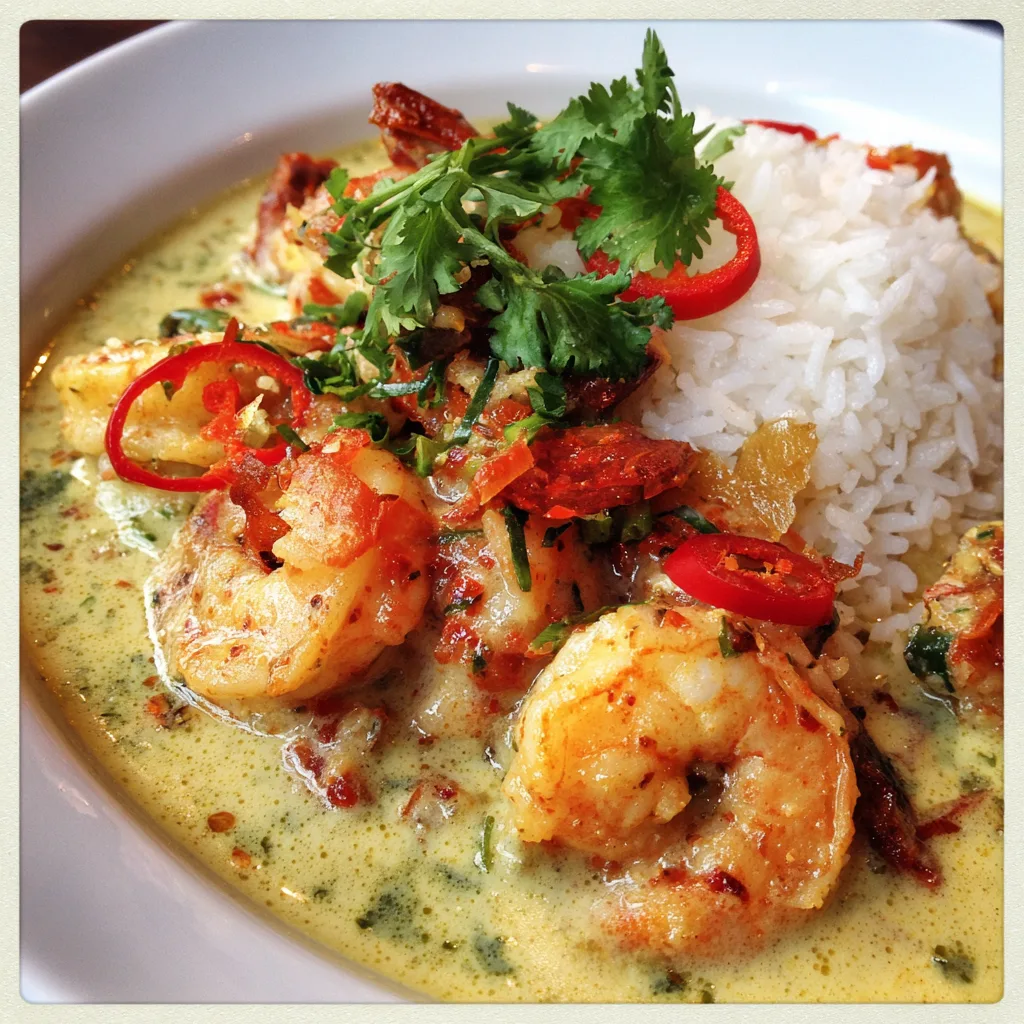
Family-Friendly Mild Thai Coconut Curry is a gentle, aromatic one-pot dinner that brings together tender chicken, colorful vegetables, and naturally sweet coconut milk with just enough mild curry spice to introduce kids to new flavors without overwhelming young palates.
Chef Rachel developed this recipe after countless requests from parent friends who loved Thai food but struggled to find versions their children would actually eat—so she created a kid-friendly Thai curry that adults genuinely enjoy too, not just tolerate.
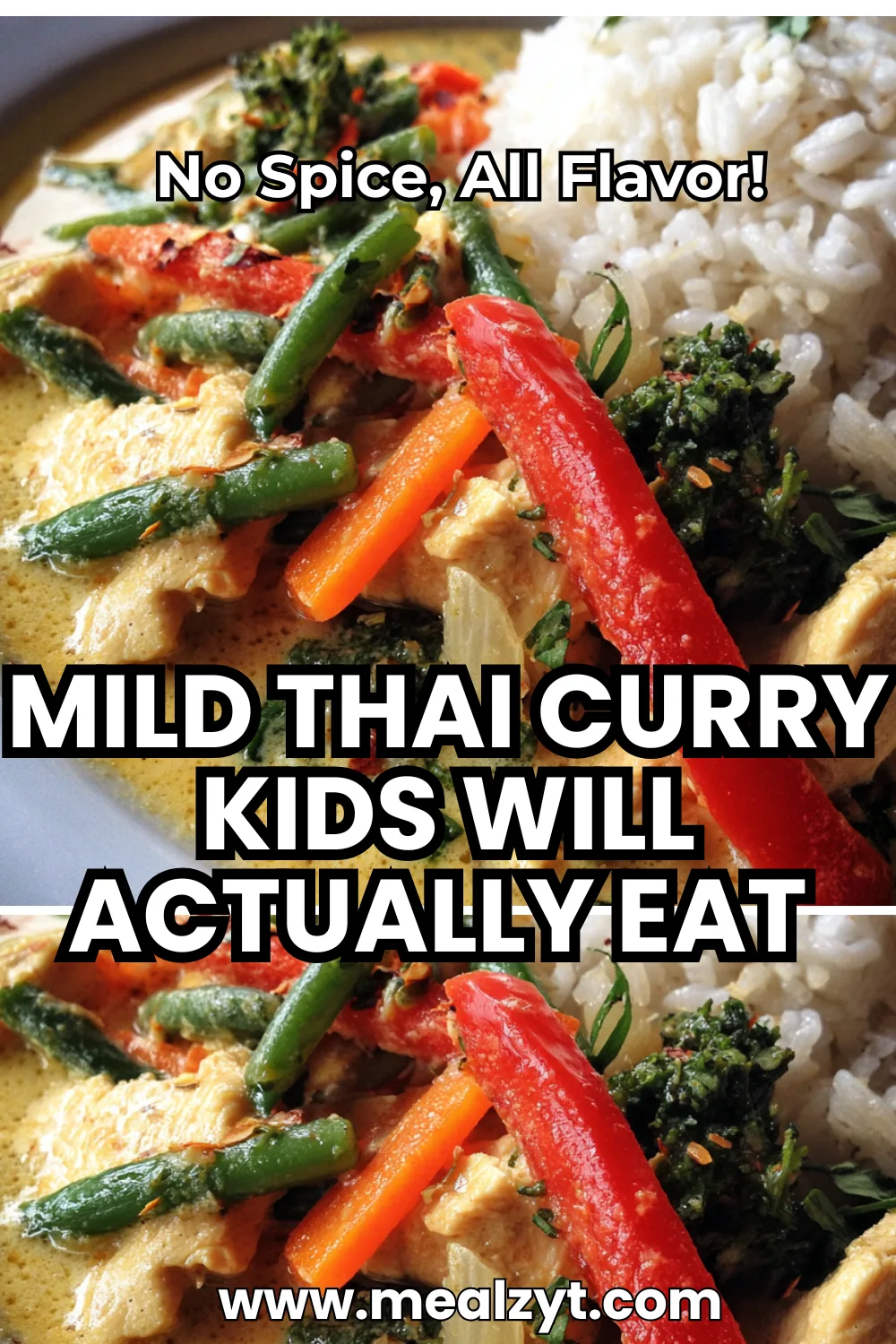
Family-Friendly Mild Thai Coconut Curry
Ingredients
Equipment
Method
- Heat 1 tablespoon coconut oil in a large Dutch oven or deep skillet over medium heat. Add yellow curry paste and stir constantly for 1-2 minutes until fragrant and oil takes on golden color.
- Add diced onion and cook for 2-3 minutes until softened. Add garlic and ginger (if using) and cook 1 more minute until aromatic.
- Add chicken pieces and stir to coat in curry mixture. Cook 4-5 minutes, stirring frequently, until lightly browned. Season with salt and pepper.
- Pour in both cans of coconut milk, broth, fish sauce (or soy sauce), and brown sugar. Stir well to combine. Add potato chunks and shredded carrots, stirring to submerge in liquid. Bring to a boil over medium-high heat.
- Once boiling, reduce heat to medium-low and cover. Simmer for 10-12 minutes until potatoes are tender and chicken is cooked through completely.
- Remove lid and add bell pepper, green beans, and diced tomatoes (if using). Cook uncovered for 5-7 minutes until beans are tender-crisp.
- Add frozen peas and cook 2 more minutes until heated through and bright green. If using spinach, stir in now and let wilt 1 minute. Remove from heat and stir in lime juice (if using).
- Taste and adjust seasoning—add more brown sugar if kids find it too spicy, or pinch more salt if needed.
- Serve over fluffy white rice, garnished with crispy fried onions for adults. Let kids customize their own bowls!
Notes
Approximately 485 kcal per serving with ¾ cup rice Protein
Approximately 28 g protein per serving from chicken breast
The secret to this family-friendly curry lies in choosing naturally mild yellow curry paste (the gentlest of all Thai curries), balancing any residual heat with extra coconut milk’s natural sweetness, and incorporating familiar vegetables that kids already recognize and trust. Chef Rachel’s friend Mery, a pediatric nutritionist and mother of three picky eaters, tested this recipe with her notoriously suspicious seven-year-old who declared it “the yellow sauce pasta” and asked for it three times that week—the ultimate seal of approval from the toughest critics.
What makes this mild Thai coconut curry so successful with families is how the creamy coconut base creates a comforting sauce reminiscent of mac and cheese or Alfredo, making it feel familiar rather than foreign to hesitant eaters. Plus, with everything cooking in one pot in under 30 minutes, busy parents can get a nutritious, vegetable-packed dinner on the table faster than ordering takeout—and for a fraction of the cost.
For more family-friendly international dinners, explore our Healthy Thai Curry in Under 30 Minutes or try our Moroccan Sweet Potato and Chickpea Dinner for gentle global flavors.
Summary
This Family-Friendly Mild Thai Coconut Curry combines bite-sized chicken breast with kid-approved vegetables like potatoes, carrots, green beans, and bell peppers in a creamy, naturally sweet coconut milk sauce flavored with gentle yellow curry paste—the mildest option in Thai cooking. Unlike green or red curries which can pack serious heat, yellow curry gets its flavor from turmeric, coriander, and cumin with minimal chili content, making it perfect for introducing children to Thai cuisine.
Why this Family-Friendly Mild Thai Coconut Curry works:
- Not spicy! Uses mild yellow curry paste with natural sweetness from coconut milk to balance any residual heat
- Ready in 25-30 minutes from prep to table—faster than most takeout orders
- Incognito veggies—shredded carrots blend seamlessly into the sauce while other vegetables become tender and sweet
- Familiar flavors—the creamy coconut sauce reminds kids of their favorite comfort foods like mac and cheese
- Highly customizable—easily adapt vegetables, protein, and spice level for individual family preferences
- One-pot cooking—less cleanup means less stress for busy parents
- Naturally gluten-free and dairy-free—perfect for common food sensitivities
The genius technique of shredding some vegetables (like carrots) helps them disappear into the sauce, adding nutrition and body without triggering texture-sensitive kids. Serve over fluffy white rice or fun shapes of pasta, and watch even your pickiest eaters ask for seconds!
Equipment
Essential tools for making Family-Friendly Mild Thai Coconut Curry:
- Large Dutch oven or deep skillet (5-6 quart) – A wider pot makes it easier for kids to help stir and see what’s cooking
- Sharp chef’s knife – For chopping vegetables into uniform, kid-friendly sizes
- Cutting board – One for vegetables and one for raw chicken
- Box grater or food processor – For shredding carrots so they blend into the sauce
- Wooden spoon or silicone spatula – Safe for little hands to help stir (with supervision)
- Measuring spoons and cups – Great opportunity for kids to practice measuring
- Ladle – For serving curry over rice
- Kitchen timer – Let kids be in charge of timing each step
Optional but helpful:
- Rice cooker for hands-free rice preparation while you make curry
- Kid-safe oven mitts for helping with pot lid
- Immersion blender to puree vegetables for ultra-picky eaters
- Fun-shaped rice molds to make serving more appealing to kids
Ingredients
For the Family-Friendly Mild Thai Coconut Curry:
Protein:
- 1 to 1¼ pounds (450-565g) boneless, skinless chicken breasts, cut into bite-sized chunks
- 1 tablespoon coconut oil or olive oil
- ½ teaspoon salt
- ¼ teaspoon black pepper
Curry Base (mild and kid-friendly):
- 2 to 3 tablespoons yellow curry paste (start with 2 tablespoons—mildest option!)
- 3 to 4 cloves garlic, minced (or ½ teaspoon garlic powder for milder flavor)
- 1 small yellow onion, diced (or 1 tablespoon onion powder)
- 1 teaspoon fresh ginger, grated (or ¼ teaspoon ginger powder—optional for more sensitive palates)
Liquids:
- 2 cans (13.5-15 oz each) full-fat coconut milk (the creaminess kids love!)
- 1 cup low-sodium chicken or vegetable broth
- 1 tablespoon fish sauce (or substitute 2 tablespoons soy sauce for gentler flavor)
- 1 to 2 tablespoons brown sugar or honey (balances any residual spice)
- 1 teaspoon lime juice (brightens flavors—optional)
Kid-Friendly Vegetables:
- 3 medium Yukon Gold or red potatoes, cut into ¾-inch chunks (familiar and filling!)
- 2 medium carrots, peeled and shredded or grated (blends into sauce)
- 1 red or yellow bell pepper, diced (adds natural sweetness and color)
- 1 cup green beans, trimmed and cut into 1-inch pieces
- ½ cup frozen peas (add at the end for bright color)
- 1 handful baby spinach (wilts invisibly into sauce—optional)
- 1 can (15 oz) diced tomatoes, drained (optional—adds body)
For Serving & Garnish:
- Cooked white rice, basmati rice, or jasmine rice (kids prefer plain white rice)
- Optional garnishes: crispy fried onions, cilantro (for adults), lime wedges
Ingredient notes for kid appeal:
- Yellow curry paste vs. red or green: Yellow is the MILDEST with minimal heat—essential for kids
- Full-fat coconut milk: The creaminess is key for kid appeal; lite coconut milk won’t have the same comforting texture
- Potatoes: Create a familiar, filling base that most kids already love
- Shredded carrots: Hide in the sauce while adding nutrition and natural sweetness
- Brown sugar: A little sweetness helps balance flavors for young taste buds
- Fish sauce: Provides authentic umami but can be replaced with soy sauce if kids are sensitive to strong flavors
Directions
Step 1: Prep ingredients with kids’ help
This is a perfect recipe for kids to participate! Have them help measure coconut milk, count out cans, or wash vegetables. Cut chicken into uniform bite-sized pieces, dice potatoes into ¾-inch chunks (not too small or they’ll fall apart), and shred carrots using a box grater. Having everything prepped makes cooking smooth and stress-free.
Step 2: Bloom the curry paste
Heat 1 tablespoon coconut oil in a large Dutch oven or deep skillet over medium heat. Once melted and shimmering, add the yellow curry paste and stir constantly for 1 to 2 minutes until fragrant and the oil begins to take on the curry’s golden color. This “blooming” step wakes up the spices and creates a flavor foundation. Kid participation: Let them smell the aromatic curry paste (from a safe distance!) and watch it change color—this builds excitement about trying new foods!
Step 3: Sauté aromatics
Add the diced onion to the curry paste and cook for 2 to 3 minutes, stirring occasionally, until the onion softens and becomes translucent. Add the minced garlic and grated ginger (if using) and cook for 1 more minute until everything smells amazing. If using powdered versions of these ingredients, stir them in now. The kitchen will start to smell incredible, which helps build anticipation for dinner.

Step 4: Cook the chicken
Add the chicken pieces to the pot and stir to coat them completely in the curry mixture. Cook for 4 to 5 minutes, stirring frequently, until the chicken is lightly browned on the outside (it doesn’t need to be fully cooked yet). Season with salt and pepper. This step adds another layer of flavor as the chicken picks up the curry coating.
Step 5: Add liquids and potatoes
Pour in both cans of coconut milk, the chicken or vegetable broth, fish sauce (or soy sauce), and brown sugar. Stir everything together until well combined. Add the potato chunks and shredded carrots, stirring to submerge them in the liquid. Bring the mixture to a boil over medium-high heat. Kid participation: This is a great moment for kids to practice pouring canned ingredients or adding vegetables to the pot (teach them to add ingredients slowly from low height to prevent splashing hot liquid).
Step 6: Simmer and cook vegetables
Once boiling, reduce heat to medium-low and cover the pot with a lid. Simmer for 10 to 12 minutes until the potatoes are tender when pierced with a fork and the chicken is cooked through completely. Kid participation: Let kids be the timekeeper—set a timer and have them announce when it’s time to check! This teaches patience and builds excitement.
Step 7: Add remaining vegetables
Remove the lid and add the diced bell pepper, green beans, and diced tomatoes (if using). Stir to combine and cook uncovered for another 5 to 7 minutes until the beans are tender-crisp and the bell peppers are softened. The curry should be bubbling gently—not boiling hard.
Step 8: Final touches
Add the frozen peas and cook for 2 more minutes until heated through and bright green. If using spinach, stir it in now and let it wilt for about 1 minute. Remove from heat and stir in the lime juice (if using). Taste the sauce and adjust seasoning—add more brown sugar if kids find it too “different,” or a pinch more salt if it tastes flat.
Step 9: Serve family-style
Ladle the mild Thai coconut curry over bowls of fluffy white rice. For kids, you might want to serve the rice and curry side-by-side initially so they can control how much sauce they want. Garnish adult portions with crispy fried onions, fresh cilantro, or lime wedges. Let everyone customize their own bowl!
Pro tips for family success:
- Don’t rush step 2—blooming the curry paste in oil creates depth of flavor that makes the whole dish special
- Taste as you go—if the curry tastes too spicy for your family, add more coconut milk or brown sugar to mellow it
- Let kids help—the more involved they are in cooking, the more willing they are to try new foods
- Start with less curry paste—you can always add more, but you can’t take it away!
Tips and Variations
Making It Even More Kid-Friendly
For ultra-picky eaters:
- Start with just 1-2 tablespoons yellow curry paste instead of 3 for the absolute mildest version
- Use onion, garlic, and ginger powders instead of fresh—the flavor is milder and no visible chunks
- Blend or puree the finished curry partially with an immersion blender so vegetables “disappear”
- Serve deconstructed—let kids build their own bowls with rice, plain chicken, and sauce on the side
- Keep plain rice aside as a safe backup option
- Add extra brown sugar—up to 3 tablespoons if needed to create a sweeter profile kids love
Vegetable customization:
- Potatoes are essential—they’re filling, familiar, and absorb the curry flavors beautifully
- Shredded carrots are magic—they bulk up the sauce and add sweetness while hiding in plain sight
- Other kid-friendly options: Sweet potatoes (naturally sweet!), corn (adds sweetness), cauliflower florets (become tender and mild), broccoli florets (for adventurous kids)
- Vegetables to avoid with picky eaters: Eggplant (texture can be off-putting), mushrooms (polarizing texture), bitter greens like kale
Protein variations:
- Chicken breast: Leanest and most neutral—the default for picky eaters
- Chicken thighs: More flavorful and stay juicier, good for older kids who are more adventurous
- Ground chicken or turkey: Mix into the sauce and it becomes even more invisible—great for texture-sensitive kids
- Shrimp: Quick-cooking and slightly sweet—add in last 5 minutes until pink
- Tofu (mild introduction to plant protein): Cut into cubes, pan-fry until golden, add at the end
- No protein: Make it vegetarian with extra potatoes, chickpeas, or white beans for a meatless Monday option
Adjusting spice levels for different family members:
- Make the base curry very mild with just 1-2 tablespoons yellow curry paste
- Adults who want more heat can add sriracha, chili crisp, or red pepper flakes to their individual bowls
- Keep sliced fresh chilies on the side for spice-lovers to add themselves
- This way, everyone can enjoy the same meal at their preferred spice level!
Serving suggestions kids love:
- Over white rice: The most kid-friendly and familiar option—fluffy jasmine or basmati rice
- With fun pasta shapes: Not traditional, but some kids prefer curry over bowtie or penne pasta
- In a burrito or wrap: Let kids wrap curry and rice in a tortilla for a fun twist
- With naan bread: Older kids love tearing and dipping bread
- Deconstructed bowls: Rice in one section, curry chicken in another, plain vegetables separate—kids assemble their own
Fun garnishes and sides:
- Crispy fried onions: Add crunch that kids love (like on green bean casserole!)
- Crushed crackers or saltines: Another familiar crunchy topping
- Raisins: Add sweetness that appeals to young palates
- Cucumber slices: Cool, refreshing, and familiar
- Baby tomatoes: Bright, sweet, and fun to eat
- Carrot sticks: For kids who prefer raw vegetables
- Plain yogurt: A cooling side that helps if curry is too spicy
- Apple slices: The sweet-savory combination works surprisingly well
Making it together as a family:
- Assign age-appropriate tasks: younger kids can wash vegetables, older kids can measure and stir
- Use this as a teaching opportunity about different cultures and cuisines
- Let kids taste individual ingredients (like coconut milk) before cooking
- Make it a weekly tradition—”Thai Thursday” builds excitement and familiarity
- Take photos of kids helping cook to create positive associations with the meal
Nutrition Facts
| Nutrient | Per Serving (with ¾ cup rice) |
|---|---|
| Calories | 485 kcal |
| Protein | 28 g |
| Total Fat | 22 g |
| Saturated Fat | 17 g |
| Carbohydrates | 48 g |
| Dietary Fiber | 5 g |
| Sugars | 10 g |
| Cholesterol | 75 mg |
| Sodium | 620 mg |
| Potassium | 780 mg |
| Vitamin A | 95% DV |
| Vitamin C | 70% DV |
| Calcium | 8% DV |
| Iron | 25% DV |
Nutritional analysis based on 4 servings using chicken breast, full-fat coconut milk, kid-friendly vegetables, and white rice. Values are approximate and will vary based on specific ingredients used.
Nutritional Highlights
Complete, balanced meal: This family-friendly curry provides all three macronutrients—protein from chicken, healthy fats from coconut milk, and carbohydrates from potatoes and rice—creating a satisfying meal that keeps kids energized for hours.
Sneaky vegetable nutrition: With shredded carrots, potatoes, bell peppers, green beans, and optional spinach, this curry delivers multiple servings of vegetables per bowl—often without kids even realizing it! The 95% daily value of vitamin A (from carrots and peppers) supports eye health and immune function, crucial for growing children.
Vitamin C boost: One serving provides 70% of daily vitamin C needs from bell peppers and potatoes, supporting immune system health—especially important during cold and flu season.
Healthy fats for brain development: The medium-chain triglycerides (MCTs) in coconut milk are easily digested and may support brain development in children. While coconut milk is high in saturated fat, these fats are structured differently than animal-based saturated fats.
Iron for growth: With 25% of daily iron needs per serving, this curry helps prevent anemia in children and supports cognitive development. The vitamin C from vegetables enhances iron absorption from the chicken.
Digestive support: The ginger (if included) can help with digestion and may reduce nausea—helpful for kids with sensitive stomachs. The fiber from vegetables and potatoes supports healthy digestive function.
Dietitian Tips
For picky eaters: Research shows that children often need 10-15 exposures to a new food before accepting it. Don’t be discouraged if your child doesn’t love this curry the first time—keep offering it in low-pressure ways. The familiarity of creamy coconut milk and the inclusion of already-liked vegetables (like potatoes) creates a “bridge” that helps kids accept new flavors.
Reducing sodium for young children: If cooking for toddlers or children under 5, reduce or eliminate the fish sauce and use low-sodium broth. Young children need less sodium than adults—aim for under 400mg per serving for this age group. You can boost flavor without salt by adding extra lime juice and a touch more brown sugar.
Balancing the meal: While this curry is nutritionally balanced, consider the whole dinner plate. Serve with a side of plain cucumber slices or a simple salad to add fresh vegetables. This also gives picky eaters a “safe” option if they’re hesitant about the curry.
Protein for growing bodies: At 28 grams per serving, this curry provides excellent protein for children’s growth and development. Active children ages 4-8 need about 19 grams of protein daily, while ages 9-13 need 34 grams, so this meal contributes significantly to those goals.
Managing food sensitivities: This curry is naturally dairy-free and gluten-free (verify curry paste labels), making it suitable for common childhood allergies and sensitivities. For kids with soy allergies, skip fish sauce or use coconut aminos. For children with shellfish allergies, carefully read curry paste labels as some authentic versions contain shrimp paste.
Building healthy eating habits: Involving children in cooking this curry teaches them valuable life skills while building positive associations with healthy foods. Studies show that kids who help prepare meals are more likely to eat vegetables and try new foods.

FAQs – 6 Frequently Asked Questions
Q1: Is yellow curry paste really mild enough for kids, or will it still be too spicy?
A: Yellow curry paste is the absolute mildest option in Thai cooking and is genuinely kid-friendly when used in moderation! Unlike green curry (made with fresh hot green chilies) or red curry (made with dried red chilies), yellow curry paste gets most of its flavor from turmeric, coriander, cumin, and lemongrass rather than chilies. Start with just 2 tablespoons of yellow curry paste for 4 servings, and balance it with the full amount of coconut milk plus 1-2 tablespoons of brown sugar—the natural sweetness completely mellows any residual heat. Most kids describe properly balanced yellow curry as “a little different but not spicy” rather than hot. If you’re worried, make a tiny test batch for yourself first, or start with even less paste (just 1 tablespoon) and add more only if needed.
Q2: What if my child refuses to try the curry—any strategies that actually work?
A: The best strategy is the “deconstructed approach” combined with low-pressure exposure. Serve the rice, plain cooked chicken pieces, and curry sauce in separate sections of the plate (or even separate bowls) and let your child choose what to try. Start by having them just smell the curry, then maybe dip a tiny piece of chicken in the sauce, then gradually build up. Research shows kids need multiple exposures (sometimes 10-15 times!) before accepting new foods, so don’t give up after one meal. Make it fun—call it “yellow magic sauce” or let them help cook it, which significantly increases willingness to try it. Always keep a “safe” side available like plain rice or cucumber slices, and avoid any pressure or bribing—just model enjoying it yourself and offer it casually at future meals.
Q3: Can I make this Family-Friendly Mild Thai Coconut Curry ahead for meal prep?
A: Absolutely! This curry is actually perfect for meal prep and tastes even better the next day as flavors meld together. Cook the curry completely, let it cool to room temperature, then portion into airtight containers. Store in the refrigerator for up to 4 days or freeze for up to 3 months. When reheating, you may need to add a splash of coconut milk or broth since the sauce thickens as it sits. The curry reheats beautifully on the stovetop over medium-low heat (stirring occasionally) or in the microwave. Many families make a double batch on Sunday to have easy weeknight dinners ready—just add freshly cooked rice and you have dinner in 5 minutes! This is especially helpful for busy families or picky eaters who do better with familiar, repeated meals.
Q4: My child doesn’t like chunks of vegetables—how can I hide them better?
A: Great question—texture is often a bigger issue than taste for picky eaters! Here are proven strategies: (1) Shred or grate vegetables like carrots and zucchini so they disappear into the sauce; (2) Use an immersion blender to partially puree the finished curry, creating a smooth, creamy sauce with small vegetable pieces rather than large chunks; (3) Cut vegetables very small—dice potatoes, bell peppers, and beans into tiny pieces rather than chunks; (4) Puree some vegetables separately (like cooked cauliflower or carrots) and add to the coconut milk before cooking—this thickens the sauce while hiding vegetables completely; (5) Choose vegetables that soften well—potatoes, sweet potatoes, and carrots become very soft and almost melt into the sauce when cooked properly. Remember that shredded carrots in particular work like magic because they bulk up the sauce while becoming nearly invisible!
Q5: Can I make this curry vegetarian and still kid-friendly?
A: Yes, vegetarian versions work beautifully! The creaminess of the coconut curry is actually what kids love most, so the protein is somewhat secondary. Best options for replacing chicken include: (1) Chickpeas—naturally sweet and mild, add 2 cans drained and rinsed; (2) Extra potatoes and sweet potatoes—double the potato content for a hearty, filling vegetarian curry; (3) White beans or cannellini beans—creamy texture similar to potatoes; (4) Tofu (for adventurous kids)—use firm or extra-firm tofu, press well, cut into cubes, and pan-fry until golden before adding to curry; (5) No additional protein—just make it vegetable-heavy with potatoes, carrots, peppers, green beans, and corn. Use vegetable broth instead of chicken broth, and replace fish sauce with soy sauce or coconut aminos. The curry remains just as creamy and comforting without meat, and the mild yellow curry flavor works perfectly with vegetables.
Q6: How do I know if my curry paste is truly mild or if it will be too spicy for my kids?
A: Always check the ingredient list and look specifically for yellow curry paste, which is inherently milder than red or green varieties. Good kid-friendly brands include Thai Kitchen Yellow Curry Paste and Maesri Yellow Curry Paste. The ingredient list should show turmeric (which gives it the yellow color) near the top, with chilies listed further down or in smaller quantities. If you’re nervous, do a taste test yourself: place a tiny amount (1/4 teaspoon) of paste on your finger and taste it—if it burns YOUR mouth immediately, it’s too hot for kids. Yellow curry paste should taste aromatic, slightly warm, and earthy rather than burning hot. You can also start with curry powder instead of curry paste for the absolute mildest version—use 2-3 tablespoons of mild curry powder (like McCormick brand) which has almost no heat at all. The combination of coconut milk, brown sugar, and lime juice will mellow whatever spice remains.
Conclusion
This Family-Friendly Mild Thai Coconut Curry proves that introducing children to global flavors doesn’t require watering down dinner to blandness—it just requires thoughtful ingredient choices and techniques that work with kids’ natural preferences rather than against them. By choosing naturally mild yellow curry paste, balancing with sweet coconut milk, and including familiar vegetables, you create a curry that genuinely appeals to both adults and children at the same table.
What makes this recipe truly special is how it transforms “international food” from something intimidating into something comfortable and crave-worthy for the whole family. Chef Rachel has watched countless skeptical kids take their first tentative taste, then quietly ask for seconds—that moment when a child discovers they actually like something new is magical for any parent trying to expand their family’s food horizons.
Her friend Mery, the pediatric nutritionist, notes that recipes like this one do more than just provide nutrition—they build food confidence in children, teaching them that “different” doesn’t automatically mean “bad,” a lesson that serves them well throughout life. The act of cooking together creates positive associations, and the success of trying something new builds self-efficacy that extends beyond the dinner table.
Ready for more family-friendly global recipes? Try our One-Pot Thai Coconut Chicken Curry for the slightly more grown-up version once kids are ready, or explore our Moroccan Couscous One-Pot — Ready in 30 for another gentle introduction to international flavors.
The beauty of this Family-Friendly Mild Thai Coconut Curry is how it grows with your family—start very mild when kids are young, gradually increase curry paste as they become more adventurous, and eventually you’ll have teenagers who request “the Thai curry” for their birthday dinner. That’s the real win: creating food traditions that bring families together around the table, one gentle new flavor at a time.
So grab that can of coconut milk, recruit your kids as sous chefs, and discover how the sweet, creamy, aromatic magic of mild Thai curry can become a new family favorite. Your future self will thank you when your children are the adventurous eaters who try anything—and it all started with yellow curry and a little bit of brown sugar.
More recipes in mealzyt.com.