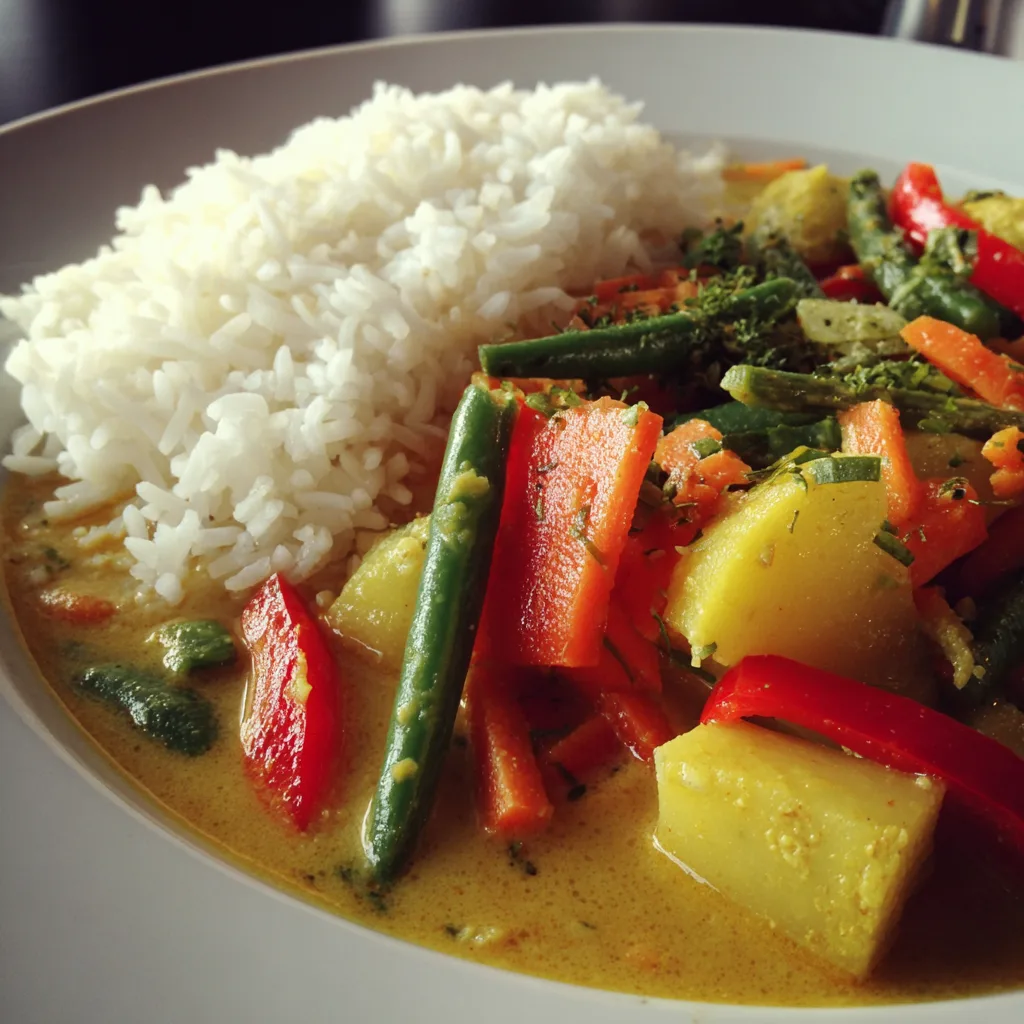
Healthy Thai Curry in Under 30 Minutes is a vibrant, nourishing one-pot dinner that brings together lean protein, colorful vegetables, and aromatic Thai curry paste simmered in light coconut milk for a guilt-free, restaurant-quality meal any night of the week.
Chef Rachel created this streamlined version after realizing that traditional Thai curries, while absolutely delicious, often contained more coconut cream than her weeknight wellness goals allowed—so she developed a healthy Thai curry technique that delivers all the flavor with half the calories.
Healthy Thai Curry in Under 30 Minutes
Ingredients
Equipment
Method
- Heat a large non-stick skillet or wok over medium-high heat and spray lightly with cooking spray. Season chicken with salt and pepper, add to hot pan, and cook for 5-7 minutes until golden and mostly cooked through. Remove and set aside.
- In the same pan, reduce heat to medium and add shallots. Sauté for 2-3 minutes until softened. Add garlic and ginger, stirring constantly for 1 minute until fragrant.
- Add Thai curry paste and cook, stirring frequently, for 1-2 minutes until darkened and very aromatic.
- Pour in light coconut milk and broth, stirring well to dissolve curry paste completely. Add lime juice, fish sauce, honey (if using), and lime leaves. Bring to a gentle simmer.
- Return chicken to pan along with broccoli, bell pepper, and carrots. Lower heat to medium and simmer gently for 8-10 minutes, stirring occasionally, until chicken is cooked through and vegetables are tender-crisp.
- Add snow peas and cook for 3-4 minutes until bright green and tender-crisp.
- Optional: If curry seems too thin, mix 1 teaspoon cornstarch with 1 tablespoon cold water, add to curry, and simmer 2 minutes until thickened.
- Taste and adjust seasonings with more fish sauce, lime juice, or honey as needed. Remove from heat and stir through fresh basil leaves.
- Serve immediately over cauliflower rice or brown rice, garnished with cilantro, green onions, and lime wedges.
Notes
Approximately 320 kcal per serving with cauliflower rice (520 kcal with ¾ cup jasmine rice) Protein
Approximately 32 g protein per serving from chicken breast
The brilliance of this 30-minute Thai curry lies in how it balances indulgence with nutrition: by using light coconut milk strategically combined with vegetable broth, you get that signature creamy texture without the heavy feeling, while loading up on fiber-rich vegetables ensures you’re eating a rainbow of anti-inflammatory nutrients.
Chef Rachel’s friend Mery, a holistic nutritionist who studied Thai cooking in Chiang Mai, taste-tested this recipe and was impressed by how the technique of bulking up the sauce with pureed vegetables creates body and richness without added fat.
Whether you’re following a Mediterranean-inspired eating pattern, counting macros, or simply want a delicious dinner that doesn’t derail your health goals, this quick Thai curry proves that eating well doesn’t mean sacrificing the bold, complex flavors that make Thai food so crave-worthy. Plus, with minimal prep and just one pot to wash, this is exactly the kind of healthy dinner idea that makes maintaining nutritious eating habits actually sustainable.
For more wholesome international dinners, explore our Easy Thai Green Curry — Weeknight Win or try our Moroccan Sweet Potato and Chickpea Dinner for anti-inflammatory comfort food.
Summary
This Healthy Thai Curry in Under 30 Minutes combines lean chicken breast with nutrient-dense vegetables like broccoli, bell peppers, and snow peas in a lighter coconut curry sauce made with reduced-fat coconut milk, vegetable broth, and authentic Thai curry paste. Unlike traditional Thai curries that can contain 600+ calories per serving from coconut cream alone, this healthier version clocks in at under 350 calories while still delivering those essential Thai flavor profiles—sweet, salty, spicy, and tangy.
Why this Healthy Thai Curry works:
- Ready in just 30 minutes from prep to plate, perfect for busy weeknights
- Uses light coconut milk combined with broth for creamy texture without excess calories
- Packed with vegetables—over 2 cups of fiber-rich veggies per serving
- High in protein (30+ grams per serving) to keep you satisfied for hours
- Naturally gluten-free, dairy-free, and easily adaptable for various diets
- The addition of fresh aromatics like garlic, ginger, and lime elevates store-bought curry paste to taste homemade
- Meal prep friendly—flavors actually improve overnight as they meld together
This recipe is incredibly versatile, working beautifully with chicken, shrimp, tofu, or chickpeas as your protein base. Serve over cauliflower rice for an ultra-low-carb option (under 400 calories total) or with a small portion of jasmine rice for a balanced meal under 500 calories.
Equipment
Essential tools for making Healthy Thai Curry:
- Large non-stick skillet or wok – A 12-inch skillet allows you to cook everything in one pan without crowding, which is key for proper vegetable texture
- Sharp chef’s knife – For efficiently prepping vegetables and slicing chicken into uniform pieces
- Cutting board – One for vegetables and one for raw chicken to prevent cross-contamination
- Wooden spoon or silicone spatula – For stirring and ensuring curry paste dissolves completely into the sauce
- Measuring cups and spoons – Precision with curry paste and coconut milk ratios keeps calories controlled
- Microplane or fine grater – For fresh ginger (the secret to restaurant-quality flavor at home!)
- Kitchen scale (optional but recommended) – For portioning chicken precisely to hit your protein goals
- Ladle – For serving curry over rice or cauliflower rice
Optional but helpful:
- Immersion blender if you want to puree some vegetables to thicken the sauce naturally
- Rice cooker for hands-off jasmine or brown rice preparation
- Spiralizer for making veggie noodles as a low-carb base
- Meal prep containers for storing individual portions
Ingredients
For the Healthy Thai Curry:
Protein:
- 1¼ pounds (565g) boneless, skinless chicken breasts, cut into bite-sized chunks (Note: leaner than thighs, keeping calories lower)
- Spray oil or 1 teaspoon coconut oil
- ½ teaspoon sea salt
- ¼ teaspoon black pepper
Aromatics & Curry Base:
- 3 to 4 cloves garlic, minced
- 1 tablespoon fresh ginger, finely grated
- 2 shallots, finely diced (or ½ small onion)
- 3 to 4 tablespoons Thai curry paste (red, green, or yellow—adjust for spice preference)
- 1 can (13.5 oz) light coconut milk (not full-fat)
- 1 cup low-sodium chicken or vegetable broth
- 2 tablespoons fresh lime juice (about 1 lime)
- 1½ tablespoons fish sauce (or coconut aminos for vegetarian)
- 1 to 2 teaspoons honey or coconut sugar (optional, to balance acidity)
- 2 kaffir lime leaves, torn (optional but adds authentic flavor)
Vegetables (choose 3-4 cups total):
- 1 medium head broccoli, broken into small florets (about 2 cups)
- 1 red or yellow bell pepper, thinly sliced
- 1 cup snow peas or snap peas, trimmed
- 1 medium carrot, thinly sliced on diagonal
- Optional additions: 1 cup green beans, 1 zucchini (sliced), 1 cup mushrooms, 2 cups baby spinach
For Serving & Garnish:
- Fresh Thai basil leaves (or regular basil)
- Fresh cilantro leaves, chopped
- Lime wedges
- Sliced red chili (optional, for heat)
- Green onions, thinly sliced
- Toasted sesame seeds or crushed peanuts (optional—adds calories but great texture)
Serving base options:
- Cauliflower rice (lowest calorie: ~25 cal per cup)
- Brown rice (healthier carb: ~215 cal per cup cooked)
- Jasmine rice (traditional: ~205 cal per cup cooked)
- Zucchini noodles (very low-carb: ~20 cal per cup)
- Quinoa (protein-rich: ~220 cal per cup cooked)
Ingredient notes for making it healthier:
- Light coconut milk vs. full-fat: Light coconut milk contains about 70 calories per ½ cup versus 200+ calories in full-fat, saving you 260 calories per recipe!
- Chicken breast vs. thighs: Breasts have about 165 calories per 4 oz versus 215 for thighs—over 60 calories saved per serving
- Vegetable bulk: Adding extra vegetables increases fiber and nutrients while keeping calories minimal (most vegetables are under 50 calories per cup)
- Curry paste: All brands vary in sodium—look for lower-sodium versions or reduce fish sauce to compensate
- Natural thickeners: Use pureed cauliflower or a bit of cornstarch mixed with water instead of extra coconut milk to thicken the sauce
Directions
Step 1: Prepare all ingredients (mise en place)
Before you start cooking, have everything ready: chicken cut into uniform bite-sized pieces, all vegetables prepped and organized by cooking time (hardy vs. tender), aromatics minced, and coconut milk shaken well. This healthy Thai curry comes together quickly once you begin, so mise en place ensures smooth, stress-free cooking.
Step 2: Cook the chicken
Heat a large non-stick skillet or wok over medium-high heat and spray lightly with cooking spray (or add 1 teaspoon coconut oil). Season chicken pieces with salt and pepper, then add to the hot pan in a single layer. Cook for 5 to 7 minutes, stirring occasionally, until the chicken is golden on the outside and cooked about 75% through. Remove chicken from the pan and set aside on a plate. Pro tip: Don’t overcrowd the pan—cook in two batches if needed to get good color on the chicken.
Step 3: Sauté the aromatics
In the same pan (keeping those flavorful browned bits!), reduce heat to medium and add the diced shallots or onion. Sauté for 2 to 3 minutes until softened and beginning to turn translucent. Add the minced garlic and grated ginger, stirring constantly for about 1 minute until incredibly fragrant. These aromatics form the flavor foundation of your healthy Thai curry, so don’t rush this step!
Step 4: Bloom the curry paste
Add the Thai curry paste directly to the aromatics and cook, stirring frequently, for 1 to 2 minutes. You’ll notice the paste darken slightly and become very aromatic as the spices toast—this “blooming” technique intensifies flavors without adding calories. Be careful not to inhale the steam directly as the chili fumes can be intense!
Step 5: Build the lighter curry sauce
Pour in the light coconut milk and vegetable or chicken broth, stirring well to completely dissolve the curry paste into the liquid—there should be no clumps. Add the lime juice, fish sauce, honey (if using), and torn kaffir lime leaves. Mix everything together and bring to a gentle simmer. The combination of light coconut milk plus broth creates a creamy yet lighter sauce that doesn’t compromise on flavor.
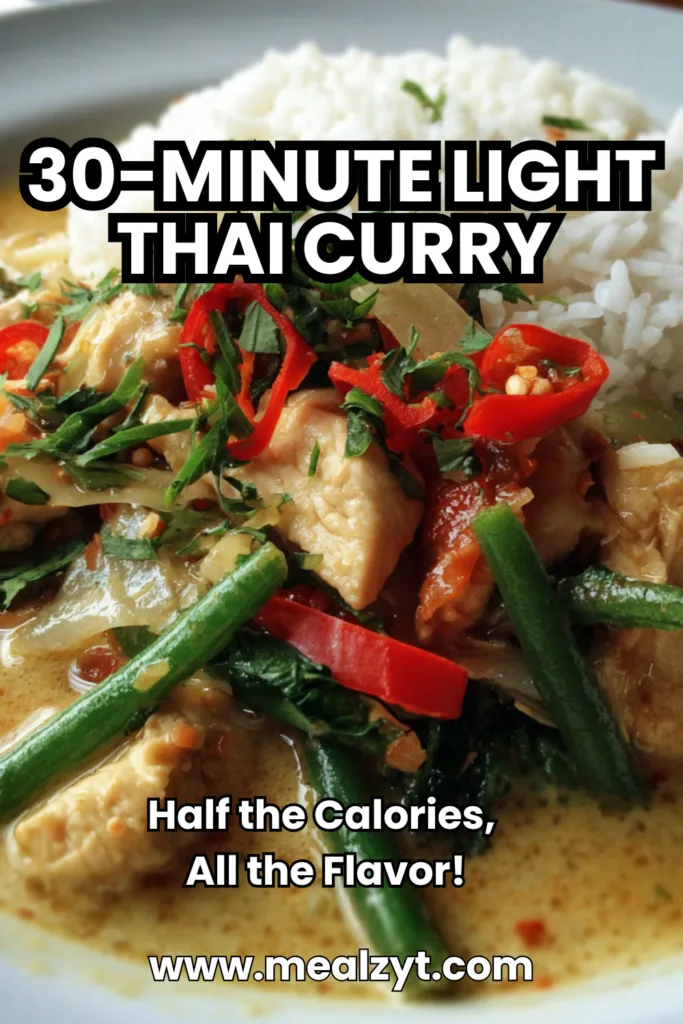
Step 6: Add hardy vegetables and chicken
Return the chicken to the pan along with broccoli florets, sliced carrots, and bell peppers. These vegetables need more cooking time to become tender. Lower the heat to medium so the curry bubbles gently (not boiling hard), and simmer uncovered for 8 to 10 minutes, stirring occasionally. The chicken will finish cooking through completely while the vegetables become tender-crisp.
Step 7: Add tender vegetables
Add the snow peas, green beans (if using), or any quick-cooking vegetables. Cook for another 3 to 4 minutes until these vegetables are bright in color and tender-crisp. If you’re adding spinach or other leafy greens, stir them in now and let them wilt for 1 to 2 minutes.
Step 8: Thicken if needed (optional)
If your curry seems too thin, you can thicken it naturally in two ways: (1) Mix 1 teaspoon cornstarch with 1 tablespoon cold water, add to the curry, and simmer for 2 minutes until thickened; or (2) Use an immersion blender to partially puree some of the vegetables right in the pot, which adds body without extra calories.
Step 9: Adjust seasoning and finish
Taste the curry and adjust seasoning as needed. Add more fish sauce for saltiness, lime juice for brightness, or a touch more honey if it tastes too acidic. For a healthy Thai curry, you want the balance of flavors without being overly sweet—the vegetables’ natural sugars should shine through.
Step 10: Serve and garnish
Remove from heat and stir through fresh Thai basil or regular basil leaves (they’ll wilt from residual heat). Ladle the curry over your chosen base—cauliflower rice for lowest calorie, brown rice for fiber, or a mix of both. Garnish with fresh cilantro, sliced green onions, lime wedges, and optional sliced chilies. Serve immediately while hot!
Pro cooking tips for keeping it healthy:
- Don’t add extra oil—use cooking spray or a very light coating of oil to keep calories minimal
- Bulk up with vegetables—the more veggies you add, the more filling and nutritious your curry becomes
- Control portion sizes—measure your rice or cauliflower rice to stay on track with your goals
- Skip added sugars if possible—the natural sweetness from coconut milk and vegetables is often enough
- Meal prep smart—portion into containers immediately to avoid overeating
Tips and Variations
Customizing Your Healthy Thai Curry
Protein options for different goals:
- Chicken breast (leanest): 165 calories per 4 oz, 31g protein—best for weight loss
- Chicken thighs (more flavor): 215 calories per 4 oz, 26g protein—stay juicier but higher calorie
- Shrimp (ultra-lean): 120 calories per 4 oz, 23g protein—add in last 4 minutes until pink
- Tofu (plant-based): 90 calories per 4 oz, 10g protein—press firmly, cube, and pan-fry until golden first
- Tempeh (fermented protein): 160 calories per 4 oz, 15g protein—crumble or cube, adds nutty flavor
- Chickpeas (vegetarian): 135 calories per ½ cup, 7g protein—use 2 cans, drained and rinsed
- White fish (cod, halibut): 110 calories per 4 oz, 23g protein—add in last 6 minutes in large chunks
Vegetable power-ups for maximum nutrition:
- Broccoli: High in fiber, vitamin C, and sulforaphane (anti-cancer compound)
- Bell peppers: Loaded with vitamin C and carotenoids for eye health
- Snap peas: Provide satisfying crunch plus vitamin K and folate
- Carrots: Beta-carotene for immune support and skin health
- Mushrooms: Umami depth plus vitamin D and selenium
- Zucchini: Very low calorie (under 20 per cup), adds bulk
- Cauliflower: Can be pureed to thicken sauce naturally without added calories
- Eggplant: Soaks up sauce like a sponge, adds heartiness
- Baby spinach: Iron, folate, and wilts in seconds
- Bok choy: Traditional Asian green with calcium and vitamin A
Making it even lighter:
- Use all broth instead of coconut milk: Saves ~140 calories per serving but loses some creaminess—compensate by pureeing some cauliflower into the sauce
- Add extra vegetables: Double the vegetable content to increase fiber and volume while keeping calories low
- Serve over spiralized vegetables: Zucchini or cucumber noodles add virtually no calories
- Skip sweeteners entirely: Let the natural coconut milk and vegetable sweetness shine through
- Use only 2 tablespoons curry paste: Reduces sodium while still delivering flavor
Curry paste options by heat level:
- Yellow curry paste: Mildest option, slightly sweet with turmeric—great for beginners or kids
- Red curry paste: Medium heat, balanced flavor—most versatile
- Green curry paste: Spiciest option with fresh, herbaceous notes
- Panang curry paste: Rich and nutty with peanut undertones—slightly higher calorie
- Massaman curry paste: Mild, warm spices (cinnamon, cardamom)—unique flavor profile
Dietary adaptations:
- Whole30 compliant: Use coconut aminos instead of fish sauce, skip honey, ensure curry paste contains compliant ingredients
- Paleo: Already Paleo-friendly as written
- Keto/Low-carb: Serve over cauliflower rice, add more coconut oil for fat, skip any sweeteners
- Vegan: Use tofu or chickpeas, coconut aminos instead of fish sauce, check curry paste for shrimp paste
- Low-FODMAP: Use garlic-infused oil instead of fresh garlic, skip shallots, use green part of green onions only
Meal prep strategies for healthy eating:
- This healthy Thai curry is perfect for weekly meal prep—portion it Sunday for easy weeknight dinners
- Store curry and rice in separate compartments of meal prep containers so textures stay perfect
- Package individual portions with measured rice/cauliflower rice to stay on track with portions
- Freeze in single-serve portions for up to 3 months—perfect for when you need a healthy meal fast
- Garnishes like herbs and lime should be added fresh when eating, not stored with the curry
- Write the calorie count on each container for easy tracking
Boosting protein without adding fat:
- Add extra lean chicken breast (31g protein per 4 oz with minimal fat)
- Stir in cooked edamame (11g protein per ½ cup)
- Add a scoop of unflavored collagen peptides to the sauce (18g protein, 70 calories)
- Serve with a side of steamed edamame pods
- Use protein-enriched cauliflower rice (some brands have added plant protein)
Nutrition Facts
| Nutrient | Per Serving (with ¾ cup cauliflower rice) |
|---|---|
| Calories | 320 kcal |
| Protein | 32 g |
| Total Fat | 11 g |
| Saturated Fat | 6 g |
| Carbohydrates | 22 g |
| Dietary Fiber | 6 g |
| Sugars | 9 g |
| Cholesterol | 85 mg |
| Sodium | 680 mg |
| Potassium | 820 mg |
| Vitamin A | 120% DV |
| Vitamin C | 140% DV |
| Calcium | 10% DV |
| Iron | 22% DV |
Nutritional analysis based on 4 servings using chicken breast, light coconut milk, 3 cups mixed vegetables, and cauliflower rice. Add ~200 calories if using jasmine rice instead. Values are approximate and will vary based on specific ingredients.
Nutritional Highlights
High protein, moderate calories: With 32 grams of protein and only 320 calories per serving, this healthy Thai curry provides an excellent protein-to-calorie ratio that supports weight management while preserving muscle mass. For comparison, many restaurant Thai curries contain 600-800 calories per serving with similar protein content.
Heart-healthy fats in moderation: By using light coconut milk, this recipe keeps saturated fat under 6 grams per serving (versus 20+ grams in traditional versions). The minimal amount of coconut fat still provides medium-chain triglycerides (MCTs) which may support metabolism, but without excess calories.
Fiber-rich for satiety: Six grams of fiber per serving (24% of daily needs) comes primarily from the abundance of vegetables. Fiber slows digestion, stabilizes blood sugar, and keeps you feeling full for hours—crucial for successful weight management.
Antioxidant powerhouse: This curry delivers over 100% of your daily vitamin C and A requirements thanks to bell peppers, broccoli, and carrots. These antioxidants support immune function, skin health, and reduce inflammation throughout the body.
Anti-inflammatory ingredients: Fresh ginger provides gingerol, turmeric in curry paste offers curcumin, and garlic contributes allicin—all powerful anti-inflammatory compounds studied for their health benefits. Regular consumption of these spices may reduce chronic inflammation linked to many diseases.
Low glycemic impact: Despite containing 22 grams of carbohydrates, the combination of protein, fat, fiber, and vegetables creates a low glycemic meal that won’t spike blood sugar. Serving with cauliflower rice instead of regular rice further reduces glycemic impact.
Micronutrient dense: Beyond vitamins A and C, this curry provides significant amounts of vitamin K (from broccoli), folate (from vegetables), and B vitamins (from chicken)—all essential for energy metabolism and overall health.
Dietitian Tips
For weight loss: This healthy Thai curry is ideal for weight loss because it’s high in protein (boosts metabolism and preserves muscle), high in fiber (increases satiety), and moderate in calories. Pair with cauliflower rice to keep total meal under 350 calories, or use a small portion (½ cup cooked) of brown rice for a balanced 450-calorie meal. The key is measuring your portions—it’s easy to overeat curry when it’s this delicious!
For muscle building: Athletes and those building muscle need roughly 0.7-1 gram of protein per pound of body weight. This curry provides 32 grams per serving, making it easy to hit protein goals. Add an extra 4 oz of chicken breast to boost protein to 40+ grams per serving. Pair with brown rice or quinoa post-workout for optimal recovery—the combination of protein and carbohydrates replenishes glycogen stores and provides amino acids for muscle repair.
For blood sugar management: This recipe is naturally diabetes-friendly due to its balanced macronutrient profile. The protein and fat slow carbohydrate absorption, preventing blood sugar spikes. For tightest blood sugar control, serve with cauliflower rice (adds only 5g carbs) instead of regular rice. Consider adding extra cinnamon to the curry—research suggests cinnamon may improve insulin sensitivity.
For heart health: While coconut milk contains saturated fat, using the light version keeps it within reasonable limits. The abundance of vegetables provides potassium (820mg per serving) which helps counteract sodium’s effects on blood pressure. To make this even more heart-healthy, reduce or eliminate added salt, use low-sodium broth, and increase vegetable content further. The fiber, antioxidants, and anti-inflammatory compounds all support cardiovascular health.
For digestive health: The ginger in this recipe is renowned for digestive support—it may reduce nausea, bloating, and inflammation in the GI tract. The 6 grams of fiber per serving feeds beneficial gut bacteria and promotes regular bowel movements. Fish sauce provides trace amounts of probiotics from the fermentation process. Consider adding fermented kimchi or sauerkraut as a side dish for additional probiotic benefits.
For longevity and disease prevention: The anti-inflammatory spices in Thai curry—particularly turmeric, ginger, and garlic—have been studied for their potential to reduce chronic disease risk. The combination of lean protein, abundant vegetables, and minimal processed ingredients aligns with Blue Zone eating patterns associated with longevity. Making this curry a regular part of your rotation means consistently eating a rainbow of vegetables packed with disease-fighting phytonutrients.
For picky eaters and families: Even kids who claim to hate vegetables often enjoy them in creamy curry sauce! Start with yellow curry paste (mildest) and minimal heat. Let children help choose which vegetables to include—they’re more likely to eat veggies they helped select. Serve the curry in a deconstructed bowl where they can choose how much sauce to add. The natural sweetness from coconut milk appeals to young palates.
Allergen and sensitivity considerations:
- Naturally gluten-free (verify curry paste label)
- Dairy-free and lactose-free
- Can be nut-free (check curry paste, avoid peanut garnishes)
- Contains fish sauce (not suitable for vegetarians unless substituted)
- Soy-free if using coconut aminos
- Low-histamine modification: Skip fish sauce, use fresh ingredients only

FAQs – 6 Frequently Asked Questions
Q1: How does this Healthy Thai Curry compare calorie-wise to restaurant Thai curry?
A: The difference is dramatic! A typical restaurant Thai curry using full-fat coconut milk contains 600-800 calories per serving before rice, primarily from the cream. This healthy Thai curry made with light coconut milk and extra vegetables contains just 320 calories—that’s less than half! When you add cauliflower rice, your total meal is under 350 calories compared to 900-1000+ calories for the restaurant equivalent with jasmine rice. The savings come primarily from using light coconut milk (70 cal per serving vs. 200+), lean chicken breast instead of thighs, and bulking up with low-calorie vegetables instead of more sauce.
Q2: Can I meal prep this Healthy Thai Curry for the week?
A: Absolutely! This is one of the best curries for meal prep because the flavors actually improve as they sit. Cook a double batch on Sunday, let it cool completely, then portion into 4-5 airtight containers. Store curry and rice (or cauliflower rice) in separate compartments to prevent sogginess. The curry will keep in the refrigerator for up to 5 days or freeze for up to 3 months. When reheating, add a splash of broth or water since the sauce thickens as it sits. Add fresh herbs, lime juice, and any crunchy garnishes just before eating for best flavor and texture. This makes it perfect for healthy lunch meal prep—just grab and go!
Q3: What’s the best curry paste to use for a healthy, lower-sodium version?
A: Most Thai curry pastes are high in sodium, but you can manage this by choosing wisely and adjusting other salty ingredients. Look for brands that list lower sodium content on the label—some natural/organic brands use less salt. Mae Ploy and Maesri brands are authentic and widely available. To reduce overall sodium: (1) Use low-sodium broth; (2) Reduce fish sauce from 1½ tablespoons to just 2 teaspoons (fish sauce is very high in sodium but essential for flavor); (3) Don’t add any additional salt; (4) Rinse canned vegetables if using them. The total sodium in this healthy version is 680mg per serving, which is reasonable, but these adjustments can bring it under 500mg if needed for medical reasons.
Q4: Is light coconut milk really that much better than full-fat for health?
A: For weight management, yes—the calorie difference is substantial! Full-fat coconut milk contains about 200-240 calories per ½ cup serving, while light coconut milk has only 60-70 calories for the same amount. That’s a savings of 140+ calories per serving, or 560 calories per recipe! For a typical four-serving batch, you’re saving over 2,200 calories total by using light instead of full-fat. In terms of saturated fat, full-fat contains 20-24g per ½ cup versus 5-6g in light coconut milk. While some nutritionists believe coconut’s saturated fat isn’t as harmful as previously thought, keeping it moderate is still wise for most people. The trade-off is minimal—light coconut milk still provides that signature creamy texture, especially when combined with broth and thickened with vegetables or a touch of cornstarch.
Q5: Can I make this Healthy Thai Curry vegetarian or vegan while keeping it high in protein?
A: Yes, with smart plant-based protein choices! The easiest swap is using extra-firm tofu: press it well to remove moisture, cut into cubes, pan-fry until golden and crispy on the outside, then add to the curry. Tofu provides about 10g protein per 4 oz. To boost protein further: (1) Add two cans of chickpeas (14g protein per can); (2) Use both tofu AND chickpeas together; (3) Add ½ cup edamame (8g protein per ½ cup); (4) Stir in tempeh (15g protein per 4 oz); (5) Serve over quinoa instead of rice (8g protein per cup cooked vs. 4g for rice). Replace fish sauce with coconut aminos (use 2 tablespoons for similar umami depth) and use vegetable broth. With these swaps, you can easily achieve 20-25g plant protein per serving.
Q6: How can I make this curry even more filling without adding calories?
A: The key is maximizing volume with low-calorie, high-fiber foods! Here are proven strategies: (1) Double the vegetables—add an extra 2 cups of low-calorie veggies like broccoli, cauliflower, zucchini, or mushrooms (adds 50-100 calories max but significantly increases volume); (2) Use cauliflower rice exclusively—it’s 80% lower in calories than regular rice while adding bulk; (3) Add shirataki noodles (konjac noodles)—these have almost zero calories and add satisfying texture; (4) Include fibrous vegetables—broccoli, cabbage, and leafy greens expand in your stomach and trigger satiety hormones; (5) Drink water before eating—studies show drinking 16 oz of water before meals increases satiety; (6) Serve in a large bowl—psychological research shows we feel more satisfied eating from larger portions, even if actual calories are the same. These strategies help you feel truly satisfied while maintaining the calorie deficit needed for weight loss.
Conclusion
This Healthy Thai Curry in Under 30 Minutes revolutionizes the idea that healthy eating means bland, boring food. By strategically using light coconut milk, loading up on colorful vegetables, and choosing lean proteins, you get a curry that rivals any Thai restaurant’s version—with less than half the calories and a nutrition profile that actually supports your wellness goals rather than sabotaging them.
What makes this recipe truly special is how it proves that with smart technique and ingredient choices, you can enjoy the foods you crave while still making progress toward your health and fitness goals. Chef Rachel has made this curry dozens of times since creating it, often doubling the batch for meal prep so she has healthy lunches ready for the entire week. It’s become her go-to recipe when she wants something that feels indulgent but keeps her on track.
Her friend Mery, the holistic nutritionist who’s notoriously picky about “healthy” versions of international cuisines, gives this healthy Thai curry her enthusiastic endorsement—particularly praising how the abundance of vegetables doesn’t feel like a compromise but rather an enhancement. The variety of textures, colors, and nutrients from the vegetable rainbow makes every bite interesting and satisfying.
Ready to explore more healthy international dinners? Try our One-Pot Thai Coconut Chicken Curry for the full-fat indulgent version, or explore our Vegan Moroccan Stew with Warm Spices for another nutritious globally-inspired meal.
The beauty of this Healthy Thai Curry in Under 30 Minutes is how it fits seamlessly into any eating pattern—whether you’re counting macros, following Mediterranean-inspired eating, practicing intuitive eating, or simply trying to incorporate more vegetables into your diet. It’s proof that healthy eating doesn’t require sacrifice; it just requires a little creativity and knowledge about how to maximize flavor while minimizing empty calories.
So grab that can of light coconut milk, chop up a rainbow of vegetables, and discover how satisfying healthy eating can truly be. Your taste buds and your body will thank you.
More recipes in mealzyt.com.