
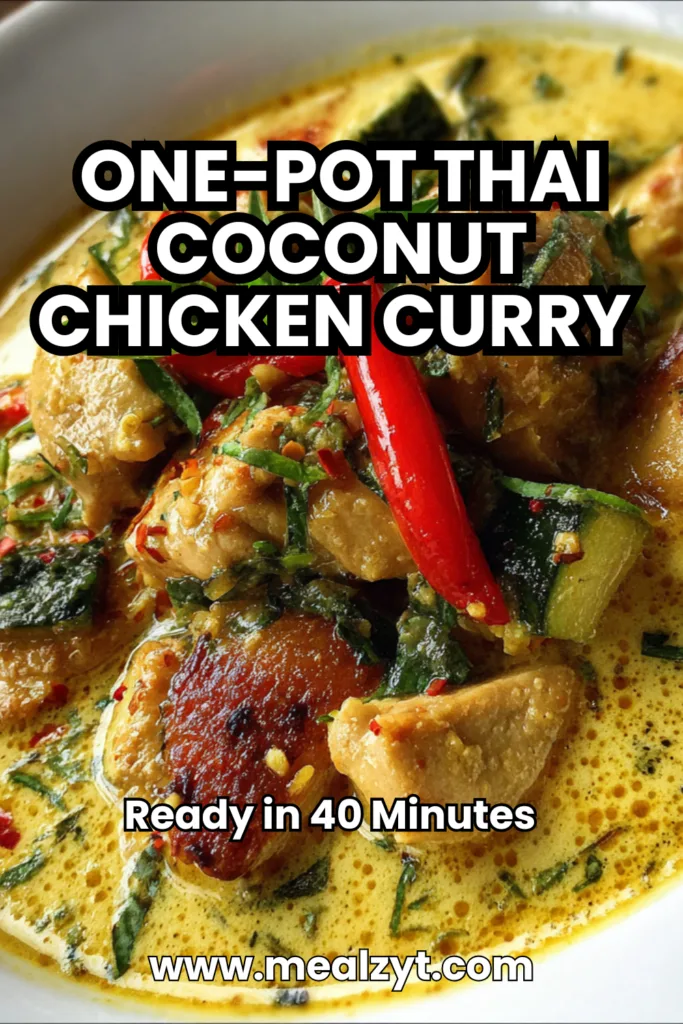
One-Pot Thai Coconut Chicken Curry is a creamy, aromatic Thai-inspired dish that layers tender chicken thighs with coconut milk, red curry paste, and fresh vegetables for a weeknight dinner ready in just 40 minutes.
Chef Rachel discovered this recipe during her travels through Thailand, where street vendors simmered chicken in fragrant coconut broth right in their woks, and she’s been making her simplified one-pot Thai coconut chicken curry version ever since.

One-Pot Thai Coconut Chicken Curry
Ingredients
Equipment
Method
- Heat 2 to 3 tablespoons of coconut oil in a large skillet or Dutch oven over medium-high heat until shimmering.
- Add the diced onion and sauté for about 5 minutes, stirring intermittently, until the onion begins to soften and turn translucent.
- Add the diced chicken to the pan and cook for about 5 minutes, flipping and stirring often to ensure even cooking on all sides.
- Add the minced garlic, ginger, and ground coriander and cook for about 1 minute, stirring frequently, until fragrant.
- Stir in the Thai red curry paste and cook for another 30 seconds to 1 minute, coating the chicken and aromatics in the paste until fragrant.
- Add the coconut milk, shredded carrots, salt, and pepper, stirring everything together until well combined.
- Reduce the heat to medium and allow the curry to gently boil for about 5 to 7 minutes, or until the liquid reduces slightly, the sauce thickens, and the chicken is cooked through completely.
- Add the fresh spinach leaves and stir until they wilt and become tender, about 1 to 2 minutes.
- Remove the pan from heat and stir in the fresh lime juice. Taste and adjust seasoning with more curry paste, salt, or optional brown sugar.
- Evenly sprinkle the chopped cilantro over the curry and serve immediately over fluffy jasmine rice, quinoa, or with warm naan bread and extra lime wedges.
Notes
Approximately 280 kcal per serving without rice Protein
Approximately 28 g protein per serving from chicken
The beauty of this Thai coconut chicken curry lies in its simplicity—you sauté aromatics, add curry paste and coconut milk, then let everything bubble away in one pot so the chicken absorbs all those bold Thai flavors while you prep rice or warm some naan.
Chef Rachel’s friend Mery, who grew up eating authentic Thai curries in Bangkok, tested this recipe and declared it restaurant-quality, praising how the coconut milk curry balances creamy richness with just the right amount of heat from the Thai red curry paste.
Whether you’re meal prepping for the week or feeding a hungry family on a busy Tuesday, this easy Thai chicken curry delivers maximum flavor with minimal cleanup, making it perfect for anyone seeking healthy dinner ideas that still taste indulgent.
For more quick international dinners, explore our Mediterranean-Inspired Moroccan One-Pot or try our Vegan Moroccan Stew with Warm Spices for plant-based comfort food.
Summary
This One-Pot Thai Coconut Chicken Curry combines bite-sized chicken pieces with sweet Vidalia onions, shredded carrots, and fresh spinach in a luscious coconut milk-based sauce spiked with Thai red curry paste, ginger, and coriander. The curry paste brings complex layers of lemongrass, galangal, and chilies, while coconut milk mellows the heat and adds silky texture. A splash of lime juice at the end brightens everything, and fresh cilantro adds the perfect finishing touch.
Why this recipe works:
- One-pot cooking means less cleanup and more flavor as everything simmers together
- Ready in 40 minutes from start to finish, perfect for busy weeknights
- Naturally gluten-free and easily adaptable for different dietary needs
- Low in calories (under 200 per serving without rice) but incredibly satisfying
- Meal prep friendly—flavors deepen as leftovers sit in the fridge
The recipe scales beautifully for meal prep, stores well for up to 5 days, and freezes for up to 3 months, making it ideal for batch cooking.
Equipment
Essential tools for making Thai coconut chicken curry:
- Large deep skillet or Dutch oven with lid – A 12-inch skillet or 5-quart Dutch oven gives you enough room to sauté the chicken and simmer the sauce without crowding
- Sharp chef’s knife – For dicing chicken and chopping vegetables quickly and safely
- Cutting board – Preferably one dedicated to raw meat
- Wooden spoon or silicone spatula – For stirring and scraping up flavorful bits from the pan
- Measuring cups and spoons – Precision matters with curry paste to control heat levels
- Grater or microplane – If using fresh ginger instead of ground
- Ladle – For serving the curry over rice
- Airtight containers – For storing leftovers or meal prep portions
Optional but helpful:
- Rice cooker for perfectly fluffy jasmine rice
- Immersion blender if you prefer a smoother sauce
- Lime squeezer for maximum juice extraction
Ingredients
For the One-Pot Thai Coconut Chicken Curry:
Protein & Aromatics:
- 1 to 1 ½ pounds boneless, skinless chicken breasts or thighs, diced into bite-sized pieces
- 2 to 3 tablespoons coconut oil (or olive oil)
- 1 medium/large sweet Vidalia onion or yellow onion, diced small
- 3 cloves garlic, finely minced or pressed
- 2 to 3 teaspoons ground ginger (or 1 tablespoon fresh ginger, finely chopped)
Spices & Curry Base:
- 2 teaspoons ground coriander
- 1 to 3 tablespoons Thai red curry paste (adjust to heat preference)
- 1 teaspoon kosher salt, or to taste
- ½ teaspoon freshly ground black pepper, or to taste
Liquids & Vegetables:
- 1 can (13.5 ounces) coconut milk (full-fat for richest flavor, lite works too)
- 1 to 1 ½ cups shredded carrots
- About 3 cups fresh baby spinach leaves
- 1 tablespoon fresh lime juice
- 1 to 2 tablespoons brown sugar (optional, for balancing heat)
For Serving & Garnish:
- ¼ cup fresh cilantro, finely chopped (or Thai basil)
- Cooked jasmine rice, basmati rice, quinoa, or warm naan bread
- Extra lime wedges
- Optional: sliced red chilies, Thai basil, crushed peanuts
Ingredient notes:
- Chicken: Thighs stay juicier than breasts and have more flavor, but breasts work if that’s what you prefer
- Curry paste: Brands vary in heat—start with 1 tablespoon if you’re sensitive to spice, or go up to 3 tablespoons for authentic Thai heat levels
- Coconut milk: Don’t confuse canned coconut milk with the sweetened coconut milk beverage in cartons—you need the thick canned variety
- Vegetables: Bell peppers, snap peas, broccoli, cauliflower, or mushrooms all work beautifully in this curry
Directions
Step 1: Sauté the aromatics
Heat 2 to 3 tablespoons of coconut oil in a large skillet or Dutch oven over medium-high heat. Once the oil shimmers, add the diced onion and sauté for about 5 minutes, stirring intermittently, until the onion begins to soften and turn translucent. The onions should be tender but not browned—you want them to release their natural sweetness.
Step 2: Cook the chicken
Add the diced chicken to the pan and cook for about 5 minutes, flipping and stirring often to ensure even cooking on all sides. The chicken doesn’t need to be completely cooked through at this stage—it will finish cooking in the sauce. Season lightly with a pinch of salt and pepper as it cooks.
Step 3: Bloom the spices
Add the minced garlic, ginger, and ground coriander to the pan and cook for about 1 minute, stirring frequently until fragrant. This step, called “blooming,” activates the aromatic compounds in the spices and creates a deeper flavor foundation for your Thai coconut curry.
Step 4: Build the curry sauce
Stir in the Thai red curry paste and cook for another 30 seconds to 1 minute, coating the chicken and aromatics in the paste. The paste should become fragrant and slightly darker in color. Now add the coconut milk, shredded carrots, salt, and pepper, stirring everything together until well combined.
Step 5: Simmer to perfection
Reduce the heat to medium and allow the curry to gently boil for about 5 to 7 minutes, or until the liquid volume reduces slightly and the sauce thickens. The carrots should be tender but still have a slight bite, and the chicken should be cooked through completely (internal temperature of 165°F).
Step 6: Add greens and finish
Add the fresh spinach leaves to the pan and stir until they wilt and become tender, about 1 to 2 minutes. Remove the pan from heat and stir in the fresh lime juice. Taste the curry and adjust seasoning—add more curry paste for heat, salt for savoriness, or brown sugar if the curry tastes too spicy or acidic.
Step 7: Garnish and serve
Evenly sprinkle the chopped cilantro over the curry. Serve immediately over fluffy jasmine rice, quinoa, or with warm naan bread on the side. Don’t forget extra lime wedges for squeezing over individual servings!
Pro cooking tips:
- Don’t skip the lime juice—it brightens all the flavors and cuts through the richness of the coconut milk
- If your sauce seems too thick, add a splash of water or chicken broth; if it’s too thin, simmer uncovered for a few extra minutes
- For crispier chicken, you can sear the pieces for an extra minute before adding the curry paste
- Add vegetables like bell peppers or snap peas when you add the carrots so they cook to tender-crisp perfection
Tips and Variations
Customizing Your Thai Coconut Chicken Curry
Protein swaps:
- Use shredded rotisserie chicken for an even faster weeknight version—add it when you add the spinach so it just heats through
- Swap chicken for chickpeas to make this vegetarian Thai curry—use 2 cans of drained chickpeas
- Try shrimp instead of chicken—add raw shrimp in the last 5 minutes of cooking
- Cubed firm tofu works beautifully for a vegan version—press it first and sauté until golden before adding curry paste
Vegetable variations:
- Bell peppers (red, yellow, or orange) add sweetness and crunch—add with the carrots
- Broccoli or cauliflower florets bulk up the curry and add fiber—steam them separately and stir in at the end
- Snap peas or snow peas bring crisp texture—add in the last 3 minutes
- Mushrooms (shiitake, cremini, or button) add umami depth—sauté with the onions
- Sweet potatoes make the curry heartier—cube small and add with the coconut milk for longer simmering
- Zucchini or summer squash add in the last 5 minutes so they don’t get mushy
- Cherry tomatoes burst and add acidity—stir in with spinach
Adjusting heat levels:
- Start with 1 tablespoon of Thai red curry paste if you’re sensitive to spice—you can always add more at the end
- For mild Thai curry, use only 1 tablespoon curry paste and add an extra tablespoon of brown sugar
- For extra spicy curry, increase to 3 tablespoons curry paste and add sliced fresh Thai chilies
- Balance excessive heat by adding more coconut milk, a spoonful of peanut butter, or extra brown sugar
Curry paste alternatives:
- Thai green curry paste creates a brighter, herbaceous flavor profile
- Thai yellow curry paste is milder and slightly sweeter, perfect for kids
- Thai Panang curry paste offers a richer, nuttier taste with peanut undertones
- Indian curry powder works in a pinch but creates a completely different flavor—this becomes more of a coconut chicken curry than Thai-style
Make it a complete meal:
- Stir in cooked rice directly into the curry for a one-pot meal
- Add rice noodles in the last 5 minutes for pad Thai-inspired vibes
- Serve over cauliflower rice for a low-carb option
- Top with crispy fried shallots or garlic for texture contrast
- Add a handful of fresh Thai basil along with cilantro for authentic flavor
- Serve with cucumber salad or pickled vegetables on the side for contrast
Meal prep strategies:
- This curry tastes even better the next day after flavors have melded
- Store curry and rice separately in meal prep containers—rice stays fluffier this way
- Portion into individual containers for grab-and-go lunches
- Freeze in freezer-safe bags or containers for up to 3 months
- Reheat gently on the stovetop or microwave, adding a splash of coconut milk or water if needed
Nutrition Facts
| Nutrient | Per Serving (without rice) |
|---|---|
| Calories | 280 kcal |
| Protein | 28 g |
| Total Fat | 16 g |
| Saturated Fat | 11 g |
| Carbohydrates | 12 g |
| Dietary Fiber | 3 g |
| Sugars | 6 g |
| Cholesterol | 75 mg |
| Sodium | 520 mg |
| Potassium | 580 mg |
| Vitamin A | 95% DV |
| Vitamin C | 25% DV |
| Calcium | 8% DV |
| Iron | 20% DV |
Nutritional analysis based on 4 servings using chicken breast, full-fat coconut milk, and 2 tablespoons curry paste. Values are approximate and will vary based on specific ingredients and portions.
Nutritional Highlights
High-quality protein: With 28 grams of protein per serving, this Thai coconut chicken curry provides nearly 60% of the daily protein requirement for most adults. Chicken breast is a lean protein source that supports muscle maintenance and keeps you feeling full for hours.
Healthy fats from coconut milk: The medium-chain triglycerides (MCTs) in coconut milk are metabolized differently than other fats and may support energy production and metabolism. While coconut milk is high in saturated fat, it also contains lauric acid, which has antimicrobial and anti-inflammatory properties.
Antioxidant-rich spices: Thai red curry paste contains turmeric, which provides curcumin—a powerful anti-inflammatory compound. Ginger adds gingerol, known for digestive support and immune-boosting properties. Coriander contributes antioxidants that may help regulate blood sugar levels.
Vitamin A powerhouse: With 95% of your daily vitamin A requirement in one serving, this curry supports eye health, immune function, and skin health. The vitamin A comes primarily from the carrots and spinach.
Low in carbohydrates: At only 12 grams of carbs per serving (without rice), this curry fits easily into low-carb and keto-friendly meal plans when served over cauliflower rice.
Fiber for digestive health: The vegetables provide 3 grams of fiber per serving, supporting healthy digestion and contributing to feelings of fullness.
Dietitian Tips
For weight management: This one-pot Thai curry is naturally low in calories but incredibly satisfying due to its high protein and healthy fat content. Serve with a small portion of brown rice or cauliflower rice to create a balanced meal under 400 calories that will keep you full for hours.
For athletes and active individuals: The combination of protein and carbohydrates (when served with rice) makes this curry an excellent post-workout meal. The coconut milk provides quick-absorbing fats for energy, while chicken delivers amino acids for muscle recovery.
For blood sugar management: Use lite coconut milk to reduce overall fat content, and pair the curry with brown rice or quinoa instead of white rice for a lower glycemic index. The protein and fat in the curry naturally slow carbohydrate absorption, helping to prevent blood sugar spikes.
For heart health: While coconut milk is high in saturated fat, studies suggest that the type of saturated fat in coconut may not have the same negative effects as saturated fat from animal sources. To make this curry more heart-healthy, use lite coconut milk and increase the vegetable content.
For inflammation reduction: The combination of turmeric in the curry paste, ginger, and omega-3 fatty acids creates a powerful anti-inflammatory meal. Add extra fresh ginger and consider stirring in a teaspoon of fresh turmeric root for additional benefits.
For picky eaters: This curry’s creamy texture and mild-to-medium heat level makes it appealing even to those who typically avoid spicy food. Start with less curry paste and let everyone adjust heat at the table with extra curry paste or chili flakes.
Allergen considerations:
- Naturally gluten-free, but always check curry paste labels as some brands may contain wheat
- Dairy-free and suitable for lactose intolerance
- Can be made nut-free by avoiding peanut garnishes (some curry pastes contain shrimp paste, so check labels for shellfish allergies)
FAQs – 6 Frequently Asked Questions
Q1: Can I use chicken thighs instead of chicken breasts in this Thai coconut curry?
A: Absolutely! In fact, chicken thighs are preferred by many home cooks because they stay juicier and have more flavor than breasts. Bone-in, skin-on thighs add even more richness to the sauce, though they require longer cooking time (about 45-60 minutes in the oven or 25-30 minutes on the stovetop). If using boneless, skinless thighs, cook them the same way as chicken breasts—they’ll just be more forgiving if you accidentally overcook them slightly.
Q2: What’s the difference between Thai red, green, and yellow curry paste?
A: The color differences come from the types of chilies and other ingredients used. Thai red curry paste (used in this recipe) is made with dried red chilies and has a balanced, moderately spicy flavor that’s versatile and widely loved. Green curry paste uses fresh green chilies and has a brighter, more herbaceous flavor with cilantro roots and kaffir lime—it’s often the spiciest. Yellow curry paste contains turmeric and is the mildest, with a slightly sweet, earthy flavor similar to Indian curries. You can substitute any of these in this recipe based on your heat preference and flavor goals.
Q3: How do I prevent my coconut milk from separating or curdling in the curry?
A: Coconut milk separation is normal and not a problem! Full-fat canned coconut milk naturally separates into thick cream and thinner liquid. Simply shake the can before opening or stir the contents together once you add it to the pan. If you notice the fat separating during cooking, just stir it back in. Avoid boiling the curry at too high a temperature—a gentle simmer is best. Using full-fat coconut milk (not lite) also reduces the risk of curdling because it has more stabilizing fat content.
Q4: Can I make this Thai coconut chicken curry in advance for meal prep?
A: Yes! This curry is actually perfect for meal prep because the flavors deepen and improve as it sits. Cook the curry completely, let it cool to room temperature, then portion it into airtight containers. Store in the refrigerator for up to 5 days or freeze for up to 3 months. When reheating, you may need to add a splash of coconut milk, water, or chicken broth since the sauce thickens as it sits. Reheat gently on the stovetop or in the microwave, stirring occasionally. For best results, store rice separately and prepare fresh when ready to eat.
Q5: What can I substitute if I don’t have Thai red curry paste?
A: While nothing perfectly replicates the complex flavor of authentic Thai curry paste, you can create a substitute using: 2 teaspoons of curry powder + 1 teaspoon of red pepper flakes + 1 teaspoon of fish sauce + ½ teaspoon of ground ginger. This won’t taste exactly like Thai curry but will give you a spiced, flavorful curry. You can also use Indian curry powder, though it creates a different flavor profile entirely—more earthy and less bright. For the most authentic results, it’s worth buying a small jar of Thai curry paste, which lasts for months in the refrigerator and can be used in countless recipes.
Q6: Is this Thai coconut curry healthy, and how can I make it lighter?
A: Yes, this one-pot Thai coconut chicken curry is quite healthy! It’s high in protein (28g per serving), loaded with vegetables, naturally gluten-free, and provides beneficial compounds from the spices. At 280 calories per serving without rice, it’s reasonable for most eating plans. To make it even lighter: (1) Use lite coconut milk instead of full-fat to save about 100 calories per serving; (2) Increase the vegetable content to bulk up the dish; (3) Use chicken breast instead of thighs; (4) Serve over cauliflower rice or zucchini noodles instead of regular rice; (5) Skip the optional brown sugar. Even with full-fat coconut milk, this curry fits into balanced, healthy eating patterns.
Conclusion
This One-Pot Thai Coconut Chicken Curry proves that weeknight dinners can be both effortless and extraordinary, delivering restaurant-quality Thai flavors from a single skillet in under 40 minutes. The creamy coconut milk sauce, fragrant with Thai red curry paste, ginger, and coriander, transforms simple chicken and vegetables into a meal that tastes like you spent hours in the kitchen—when really, you barely broke a sweat.
What makes this recipe truly special is its versatility. Whether you’re feeding a family of picky eaters (start with less curry paste), meal prepping for the week ahead (it freezes beautifully), or cooking for someone with dietary restrictions (naturally gluten-free and easily made vegetarian), this Thai coconut curry adapts to your needs while never compromising on flavor.
Chef Rachel still makes this curry at least twice a month, often doubling the batch so she can stash containers in the freezer for those inevitable hectic evenings when cooking from scratch feels impossible. Her friend Mery, the Thai food purist, gives it her stamp of approval—and that’s saying something.
Ready to expand your one-pot dinner repertoire? Try our Moroccan Couscous One-Pot — Ready in 30 for North African-inspired flavors, or explore our High-Protein Moroccan Stew for Meal Prep for another globally-inspired comfort meal.
The beauty of cooking lies in these simple, nourishing dishes that bring people together around the table. So grab your largest skillet, open that can of coconut milk, and let the fragrant aromas of Thailand fill your kitchen tonight. Your future self (and your family) will thank you.
More recipes in mealzyt.com.