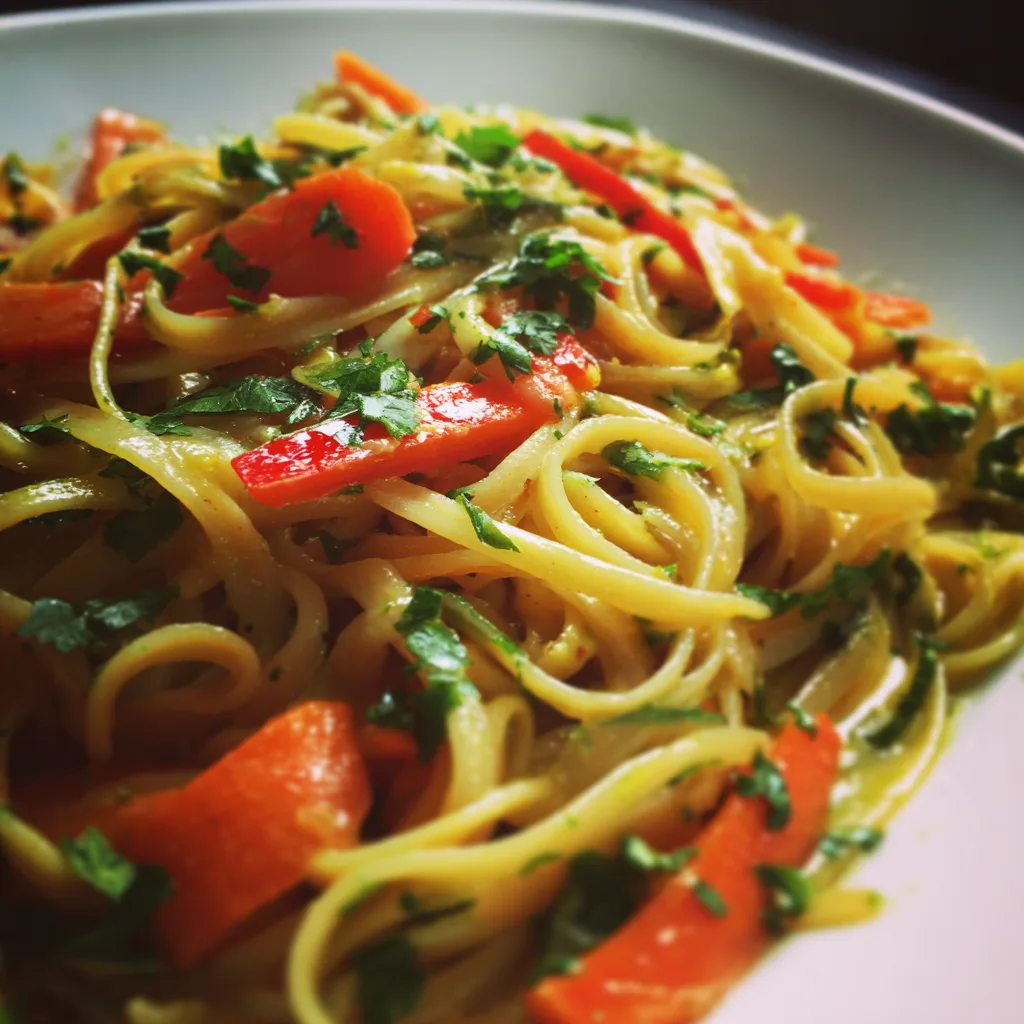
Thai Coconut Curry Noodles (One-Pot) is a lightning-fast, 20-minute dinner that combines tender rice noodles, crisp vegetables, and protein in a luscious coconut curry broth—all cooked together in a single pot for maximum flavor and minimal cleanup.
Chef Rachel discovered the magic of one-pot curry noodles during a particularly hectic week when she needed something faster than takeout but infinitely more satisfying, and this recipe was born from that beautiful collision of necessity and creativity.

Thai Coconut Curry Noodles (One-Pot)
Ingredients
Equipment
Method
- Heat 1½ tablespoons oil in a large deep skillet or wide pot over medium-high heat. Add ginger and sauté for 30 seconds until fragrant.
- Add minced garlic and Thai red curry paste, stirring constantly for 30 seconds to 1 minute until paste darkens and becomes very aromatic. Be careful—curry paste may splatter!
- Pour in vegetable or chicken broth, stirring well to dissolve curry paste completely. Cover and bring to a rolling boil.
- Once boiling, add coconut milk, soy sauce, honey, and pinch of salt. Stir together and bring back to a boil.
- Add cubed tofu (or protein) and rice noodles. Stir to submerge noodles in liquid. Cook uncovered for 4-5 minutes, stirring occasionally with tongs, until noodles soften.
- Add broccoli florets and sliced bell pepper. Continue cooking for 3-4 minutes until vegetables are tender-crisp and noodles are completely cooked.
- Turn off heat and stir in julienned carrots—they’ll soften from residual heat. Stir in fresh lime juice.
- Check consistency—sauce should coat noodles but not be soupy. If too thick, add splash of broth. If too thin, simmer uncovered 1-2 more minutes.
- Taste and adjust seasoning with more soy sauce, lime juice, or honey as needed.
- Divide into serving bowls and garnish with cilantro, green onions, peanuts, sesame seeds, and lime wedges. Serve immediately!
Notes
Approximately 420 kcal per serving (4 servings) Protein
Approximately 16 g protein per serving from tofu
The genius of these Thai coconut curry noodles lies in how the noodles cook directly in the curry-infused coconut broth, absorbing every bit of flavor from the Thai red curry paste, garlic, ginger, and creamy coconut milk as they soften.
Unlike traditional curry served over separately cooked noodles, this technique creates an integrated dish where the starch from the noodles naturally thickens the sauce while the curry flavors penetrate every strand.
Chef Rachel’s friend Mery, who spent a summer backpacking through Thailand eating khao soi at every street stall she could find, tested this recipe and was shocked by how closely it captures those authentic flavors in a fraction of the time—no separate pots for noodles, no multiple steps, just pure streamlined deliciousness.
Whether you’re meal prepping for the week, feeding a hungry family on a Tuesday night, or craving that perfect balance of creamy, spicy, and savory that makes Thai food so addictive, these one-pot curry noodles deliver restaurant-quality results with weeknight ease.
For more quick noodle dinners, explore our Easy Thai Green Curry — Weeknight Win or try our One-Pot Thai Coconut Chicken Curry for another satisfying one-pot wonder.
Summary
These Thai Coconut Curry Noodles (One-Pot) combine rice noodles with tofu, broccoli, bell peppers, and carrots in a creamy coconut milk broth spiked with Thai red curry paste, soy sauce, fresh ginger, and garlic—everything cooks together in one pan in under 20 minutes. The rice noodles soften directly in the curry broth, absorbing all those complex flavors while releasing starches that naturally thicken the sauce to a perfect consistency.
Why these Thai Coconut Curry Noodles work:
- Ready in 20 minutes or less—faster than ordering takeout!
- True one-pot cooking—noodles cook directly in the curry broth for maximum flavor absorption
- Endlessly customizable—swap proteins, vegetables, and curry paste types based on what you have
- Naturally vegan-friendly—use tofu, chickpeas, or keep it vegetable-forward
- Budget-friendly—costs a fraction of restaurant Thai food and tastes better
- The noodles thicken the sauce naturally—no need for cornstarch or additional thickeners
- Meal prep magic—though best fresh, leftovers reheat beautifully for quick lunches
The key is using quick-cooking rice noodles (like pad Thai noodles) or ramen noodles that can cook in 4-5 minutes, and adding just enough liquid so the noodles absorb most of it, leaving you with a creamy, saucy noodle dish rather than a soup.
Equipment
Essential tools for making Thai Coconut Curry Noodles:
- Large deep skillet or wide pot with lid (12-inch or 5-6 quart) – A wider pan allows noodles to cook evenly without clumping
- Sharp chef’s knife – For prepping vegetables into uniform pieces
- Cutting board – For safely chopping all your aromatics and vegetables
- Wooden spoon or silicone spatula – For stirring noodles gently without breaking them
- Measuring cups and spoons – Precision matters with curry paste for controlling spice
- Microplane or fine grater – For fresh ginger (game-changing flavor!)
- Tongs or chopsticks – Helpful for stirring long noodles once they start softening
- Ladle – For serving curry noodles into bowls
Optional but helpful:
- Kitchen timer to track the quick cooking time
- Box grater for julienning carrots quickly
- Mandoline for uniform vegetable slicing
- Large serving bowls for family-style presentation

Ingredients
For the Thai Coconut Curry Noodles (One-Pot):
Noodles:
- 8 ounces rice noodles (wide pad Thai style) OR 2 packages ramen noodles (discard seasoning packets)
- Note: Use quick-cooking varieties that soften in 4-5 minutes
Aromatics & Curry Base:
- 1½ tablespoons neutral oil (vegetable, avocado, or olive oil)
- 1 tablespoon fresh ginger, thinly sliced or grated
- 4 cloves garlic, minced
- 2 to 3 tablespoons Thai red curry paste (adjust for spice preference)
Liquids:
- 1 can (13.5-15 oz) full-fat coconut milk
- 4 to 5 cups vegetable or chicken broth (low-sodium)
- 2 tablespoons soy sauce or tamari (for gluten-free)
- 1 tablespoon honey or maple syrup (balances heat and acidity)
- 1½ tablespoons fresh lime juice
Protein:
- 14 oz extra-firm tofu, drained, pressed, and cubed
- OR 1 pound chicken breast, thinly sliced
- OR 1 pound shrimp, peeled and deveined
- OR 2 cans chickpeas, drained and rinsed (vegetarian option)
Vegetables:
- 2 large carrots, peeled and julienned or thinly sliced
- 1 head broccoli, cut into small florets
- 1 red bell pepper, thinly sliced
- Optional additions: snap peas, mushrooms, baby corn, bok choy, spinach
For Serving & Garnish:
- Fresh cilantro, chopped
- Green onions (scallions), thinly sliced
- Lime wedges
- Crushed peanuts or cashews
- Black or white sesame seeds
- Optional: Thai basil leaves, sliced red chilies, crispy fried shallots
Ingredient notes:
- Rice noodles vs. ramen: Rice noodles are traditional and gluten-free; ramen noodles are convenient and quick-cooking
- Full-fat coconut milk is essential: Lite coconut milk won’t create the same creamy texture
- Curry paste: Red curry paste is most common, but green or yellow curry also work beautifully
- Broth amount: Start with 4 cups and add more if needed—noodles continue absorbing liquid
- Tofu puffs: Pre-fried tofu puffs (available at Asian markets) are amazing in this dish
Directions
Step 1: Prep all ingredients (mise en place)
Have everything ready before you start: noodles measured out, tofu cubed (and pressed if needed), vegetables chopped, aromatics minced, and liquids measured. This one-pot curry noodles recipe moves quickly once you begin, so mise en place ensures smooth, stress-free cooking.
Step 2: Sauté aromatics and bloom curry paste
Heat 1½ tablespoons of oil in a large deep skillet or wide pot over medium-high heat. Once shimmering, add the sliced or grated ginger and sauté for about 30 seconds until fragrant. Add the minced garlic and Thai red curry paste, stirring constantly for 30 seconds to 1 minute until the paste darkens slightly and becomes very aromatic. Be careful—the curry paste may splatter a bit as it heats! This “blooming” technique is crucial for developing deep, complex curry flavor.
Step 3: Build the curry broth
Pour in the vegetable or chicken broth, stirring well to completely dissolve the curry paste into the liquid. There should be no clumps—scrape the bottom of the pan to incorporate all the flavorful bits. Cover the pot with a lid and bring everything to a rolling boil over medium-high heat.
Step 4: Add coconut milk and seasonings
Once the broth is boiling, add the coconut milk, soy sauce, honey (or maple syrup), and a pinch of salt. Stir everything together and bring the mixture back to a boil. The coconut milk will create a beautiful, creamy base for your Thai coconut curry noodles. Taste the broth at this point—it should be bold and flavorful since the noodles will absorb and mellow the flavors.
Step 5: Add protein and noodles
Add your cubed tofu, sliced chicken, or chickpeas to the pot, followed immediately by the rice noodles (breaking them up if they’re in a bundle). If using shrimp, wait to add them in the next step since they cook faster. Stir everything together to ensure the noodles are submerged in the liquid. Cook uncovered for 4 to 5 minutes, stirring occasionally and gently to prevent sticking, until the rice noodles have softened and are tender.
Pro tip: Use tongs or chopsticks to gently separate the noodles as they cook—this prevents clumping and ensures even cooking. The noodles will continue to absorb liquid as they cook, so the sauce will thicken naturally.
Step 6: Add vegetables
Once the noodles are nearly tender, add the broccoli florets, sliced bell pepper, and any other hardy vegetables you’re using. Continue cooking for 3 to 4 minutes until the vegetables are tender-crisp and the noodles are completely cooked through. If you’re using shrimp as your protein, add them now and cook just until they turn pink (about 3 minutes).
Step 7: Add tender vegetables and finish
Turn off the heat and stir in the julienned carrots—they’ll soften from the residual heat while maintaining a nice crunch. If using baby spinach, snap peas, or Thai basil, add them now and let them wilt for 1 minute. Stir in the fresh lime juice, which brightens all the flavors and cuts through the richness of the coconut milk.
Step 8: Adjust consistency and seasoning
Check the consistency—the sauce should be creamy and coat the noodles but not be soupy. If it’s too thick, add a splash more broth or water. If it’s too thin, let it simmer uncovered for another minute or two (note that noodles continue absorbing liquid even after cooking). Taste and adjust seasoning with more soy sauce (for saltiness), lime juice (for brightness), or honey (for sweetness).
Step 9: Garnish and serve immediately
Divide the Thai coconut curry noodles among serving bowls. Garnish generously with fresh cilantro, sliced green onions, crushed peanuts, sesame seeds, and lime wedges. Serve immediately while hot—these noodles are best enjoyed fresh when the noodles still have perfect texture and the vegetables are crisp-tender.
Pro cooking tips:
- Don’t overcook the noodles—they continue softening even after you remove the pot from heat
- Eat immediately if possible—rice noodles absorb liquid quickly and can become mushy if they sit too long
- For meal prep, cook noodles separately and store them apart from the curry sauce, combining when ready to eat
- Add extra liquid for leftovers—reheat with a splash of coconut milk or broth to loosen the sauce
Tips and Variations
Customizing Your Thai Coconut Curry Noodles
Noodle options:
- Rice noodles (traditional): Wide pad Thai noodles are classic—use the kind that cook in 4-5 minutes
- Ramen noodles (quick): Remove from packaging, discard seasoning packets, and use the noodles themselves
- Udon noodles: Thick Japanese noodles that stay chewy—increase cooking time by 2-3 minutes
- Glass noodles (mung bean): Delicate and translucent—cook for only 2-3 minutes
- Rice vermicelli: Very thin noodles that cook in just 2-3 minutes—watch carefully
- Soba noodles: Buckwheat noodles add nutty flavor—cook separately and add at the end
- Zucchini noodles or shirataki: Low-carb options—add in the last 2 minutes just to warm through
Protein swaps:
- Tofu (classic vegan): Extra-firm tofu cubed and added directly, or pan-fry first for crispy texture
- Tofu puffs: Pre-fried tofu cubes available at Asian markets—they soak up sauce like sponges!
- Chicken breast: Slice thinly against the grain for quick cooking
- Shrimp: Add in the last 3-4 minutes until just pink
- Chickpeas: Two cans drained—perfect vegetarian protein that’s budget-friendly
- Edamame: Adds protein and beautiful green color—stir in during last 2 minutes
- Tempeh: Fermented soy with nutty flavor—cube and pan-fry first
- Seitan: Wheat-based meat substitute with chewy texture—cube and add with noodles
- Ground chicken or turkey: Brown first in the pot before adding aromatics
- Hard-boiled eggs: Halved and added as garnish—not traditional but delicious
Vegetable variations:
- Quick-cooking vegetables (add with noodles): Bell peppers, snap peas, snow peas, mushrooms, baby corn
- Hardy vegetables (add 5 minutes before noodles are done): Broccoli, cauliflower, green beans, asparagus
- Tender vegetables (add at the very end): Julienned carrots, baby spinach, bok choy, bean sprouts, Thai basil
- For visual appeal: Use a mix of colors—red bell peppers, orange carrots, green broccoli, purple cabbage
- For texture contrast: Include something crunchy (carrots, snap peas) and something soft (mushrooms, spinach)
Curry paste options:
- Red curry paste: Most common, medium heat, balanced flavor—the default choice
- Green curry paste: Brighter, more herbaceous, typically spicier than red
- Yellow curry paste: Mildest option with turmeric, perfect for sensitive palates
- Panang curry paste: Rich, nutty, slightly sweeter—less common but delicious
- Massaman curry paste: Warm spices like cinnamon and cardamom—unique flavor profile
- Start with less curry paste (2 tablespoons) if unsure—you can always add more!
Making it spicier or milder:
- For milder curry: Use only 1-2 tablespoons curry paste, add extra coconut milk, increase honey
- For spicier curry: Use 3-4 tablespoons curry paste, add sliced fresh Thai chilies, finish with chili crisp
- Adjust heat at the table: Let each person add their own chili flakes, sriracha, or fresh chilies

Dietary adaptations:
- Gluten-free: Use rice noodles or glass noodles instead of ramen, and tamari instead of soy sauce
- Vegan: Use tofu, tempeh, or chickpeas for protein, maple syrup instead of honey
- Paleo: Serve over spiralized vegetables instead of noodles, use coconut aminos instead of soy sauce
- Keto/Low-carb: Replace noodles with shirataki noodles or kelp noodles, double the vegetables
- Nut-free: Skip peanut garnish, use sunflower seed butter if adding nut butter for extra richness
- Soy-free: Use coconut aminos instead of soy sauce, check curry paste ingredients
Boosting flavor and richness:
- Add peanut butter: Stir in 2 tablespoons natural peanut butter with the coconut milk for extra creaminess
- Include fish sauce: 1 tablespoon adds authentic umami depth (not vegetarian)
- Fresh herbs matter: Cilantro, Thai basil, and mint add brightness that dried herbs can’t match
- Lime juice is essential: Adds brightness that balances the richness—don’t skip it!
- Toast your spices: Add ½ teaspoon each of ground coriander and cumin with the curry paste for extra depth
Serving suggestions:
- As a main dish: The noodles make this hearty enough to stand alone
- With sides: Serve with spring rolls, cucumber salad, or crispy wontons
- In meal prep containers: Portion into individual servings for grab-and-go lunches
- For a crowd: Double or triple the recipe—it scales beautifully
- With extra toppings: Set out a toppings bar so everyone can customize their bowl
Meal prep and storage:
- Best fresh: These one-pot curry noodles are ideal eaten immediately when noodles have perfect texture
- Leftovers keep 2-3 days: Store in airtight containers in the fridge
- Noodles absorb liquid: Add extra broth or coconut milk when reheating
- Cook noodles separately for meal prep: Store curry sauce and noodles separately, combine when eating
- Reheat gently: Low heat on stovetop or microwave, stirring occasionally
Nutrition Facts
| Nutrient | Per Serving (4 servings) |
|---|---|
| Calories | 420 kcal |
| Protein | 16 g |
| Total Fat | 18 g |
| Saturated Fat | 13 g |
| Carbohydrates | 54 g |
| Dietary Fiber | 4 g |
| Sugars | 8 g |
| Cholesterol | 0 mg |
| Sodium | 720 mg |
| Potassium | 580 mg |
| Vitamin A | 85% DV |
| Vitamin C | 95% DV |
| Calcium | 10% DV |
| Iron | 22% DV |
Nutritional analysis based on 4 servings using rice noodles, tofu, full-fat coconut milk, vegetables, and 2 tablespoons red curry paste. Values are approximate and will vary based on specific ingredients used.
Nutritional Highlights
Quick energy from complex carbs: With 54 grams of carbohydrates per serving, these Thai coconut curry noodles provide sustained energy from rice noodles and vegetables. Rice noodles are easy to digest and naturally gluten-free, making them gentle on the digestive system.
Plant-based protein: Using tofu provides 16 grams of complete protein per serving, supporting muscle maintenance and satiety. Tofu is also rich in iron and calcium, especially important for those following plant-based diets.
Healthy fats from coconut milk: The medium-chain triglycerides (MCTs) in coconut milk are metabolized differently than other fats and may support energy production. While high in saturated fat, coconut fat is structured differently than animal-based saturated fats.
Vitamin-packed vegetables: One serving delivers 85% of daily vitamin A (from carrots and bell peppers) and 95% of vitamin C (from bell peppers and broccoli)—both crucial for immune function, skin health, and iron absorption.
Anti-inflammatory ingredients: Fresh ginger provides gingerol, garlic contributes allicin, and curry paste contains turmeric (curcumin)—all powerful anti-inflammatory compounds studied for their health benefits.
Low in cholesterol: This dish is naturally cholesterol-free when made with tofu or chickpeas, supporting heart health and making it suitable for those managing cholesterol levels.
Dietitian Tips
For balanced nutrition: These one-pot curry noodles provide all three macronutrients—protein from tofu, carbohydrates from noodles, and healthy fats from coconut milk. To boost protein further, add extra tofu or include a side of edamame.
For weight management: At 420 calories per serving, this is a reasonable meal that provides good satiety from the combination of fiber, protein, and fat. To reduce calories, use light coconut milk (saves ~100 calories per serving) and increase the vegetable content to add volume without significant calories.
For athletes and active individuals: The combination of quick-digesting carbohydrates and protein makes this an excellent post-workout meal. The anti-inflammatory properties of ginger and turmeric may support exercise recovery.
For digestive health: Ginger is renowned for supporting digestion and may reduce nausea and bloating. The fiber from vegetables supports healthy gut bacteria and regular bowel movements. If using fermented tofu, you get additional probiotic benefits.
For blood sugar management: The fat and protein in this dish slow carbohydrate absorption, preventing blood sugar spikes. To further stabilize blood sugar, add extra vegetables and consider using bean-based noodles (like edamame pasta) which have more protein and fiber.
For heart health: While coconut milk is high in saturated fat, research suggests the type of saturated fat in coconut may not have the same cardiovascular effects as saturated fat from animal sources. The abundant vegetables provide potassium which helps counteract sodium’s effects on blood pressure.
Allergen considerations:
- Naturally dairy-free and suitable for lactose intolerance
- Gluten-free when using rice noodles and tamari
- Can be nut-free (skip peanut garnish, check curry paste)
- Soy-free if using coconut aminos and non-soy protein
- Check curry paste labels—some contain shellfish or fish products
FAQs – 6 Frequently Asked Questions
Q1: Can I use regular spaghetti or other pasta instead of rice noodles?
A: While rice noodles are traditional and cook perfectly in the curry broth, you can absolutely use regular pasta in a pinch! The key difference is that wheat pasta takes longer to cook (8-10 minutes versus 4-5 for rice noodles) and absorbs more liquid, so you’ll need to add an extra 1-2 cups of broth. Cook the pasta directly in the curry broth just like the recipe instructs, but increase cooking time until the pasta reaches al dente. The final dish won’t be quite as authentic, but it will still be delicious. Angel hair or thin spaghetti work best since they cook faster than thicker pasta shapes. For the most authentic experience, stick with rice noodles (pad Thai style), rice vermicelli, or ramen noodles, all of which are widely available in the Asian section of most supermarkets.
Q2: Why do my curry noodles turn out soupy instead of saucy like in the photos?
A: This is the most common issue with one-pot curry noodles! The key is using the right ratio of liquid to noodles. Start with only 4 cups of broth (not 5) and remember that rice noodles continue absorbing liquid even after cooking. If your noodles are done but the dish is still soupy, simply continue simmering uncovered for 3-5 more minutes—the liquid will reduce and thicken naturally as the noodles release their starches. Conversely, if you want a soupier consistency (more like a curry noodle soup), intentionally add an extra 2 cups of broth and ¼ cup more coconut milk. The brand and thickness of rice noodles also matters—wider pad Thai-style noodles absorb more liquid than thin vermicelli. Finally, remember that leftovers will thicken significantly as the noodles continue absorbing sauce, so add extra liquid when reheating.
Q3: Can I make Thai Coconut Curry Noodles ahead for meal prep?
A: These noodles are absolutely best fresh when the noodles have perfect texture and vegetables are crisp-tender. However, you CAN meal prep them with a smart strategy: cook the curry sauce (everything except the noodles) and store it separately from freshly cooked noodles. When ready to eat, simply reheat the curry sauce, add the cooked noodles, and warm everything together for 2-3 minutes. This prevents the noodles from becoming mushy and over-absorbing the sauce. Leftovers stored together keep for 2-3 days in the fridge—expect the noodles to absorb most of the sauce, so add a splash of coconut milk or broth when reheating. The vegetables will soften further, but the flavors actually deepen as they sit, so while the texture isn’t quite as perfect as fresh, it’s still delicious for quick lunches throughout the week.
Q4: What if I don’t have Thai curry paste—can I make these noodles without it?
A: Thai curry paste is really the star of this dish and provides most of the complex flavor, so while you can’t perfectly replicate it, you can create a substitute that’s still delicious. Mix together: 2 teaspoons curry powder + 1 teaspoon red pepper flakes + 1 teaspoon paprika + ½ teaspoon ground coriander + ½ teaspoon ground cumin. This creates a spiced base, but you’ll miss the depth from lemongrass, galangal, and kaffir lime that authentic curry paste provides. To get closer, add 1 teaspoon lemongrass paste (or finely minced fresh lemongrass), the zest of one lime, and an extra tablespoon of fresh ginger. Alternatively, you can use Indian curry paste or Japanese curry blocks, though these will create a completely different flavor profile—still delicious, just not Thai. Honestly, Thai curry paste is inexpensive, shelf-stable, and lasts months in the fridge once opened, so it’s worth buying a jar to keep on hand for recipes like this!
Q5: How can I make these curry noodles less spicy for kids or sensitive palates?
A: Great question—Thai curry can definitely pack heat! Start by using only 1-2 tablespoons of curry paste instead of 3, and choose yellow curry paste which is naturally milder than red or green. Balance any residual heat by adding extra coconut milk (use 1½ cans instead of 1), increasing the honey or maple syrup to 2 tablespoons (sweetness counteracts spice), and adding an extra squeeze of lime juice. You can also include sweet vegetables like carrots, bell peppers, and corn which mellow the overall heat. Another trick: cook the aromatics and curry paste as directed, then taste the broth before adding noodles—if it’s still too spicy, add more broth and coconut milk to dilute it. For families with mixed heat preferences, make the base curry mild, then let adults add their own chili crisp, sriracha, or fresh chilies at the table. Kids often tolerate the natural sweetness of yellow curry with extra coconut milk surprisingly well!
Q6: Can I make this recipe in an Instant Pot or slow cooker?
A: Yes, but with modifications since rice noodles cook so quickly! For Instant Pot: sauté the aromatics and curry paste using the sauté function, add broth, coconut milk, protein, and hardy vegetables, pressure cook on high for 3 minutes, quick release, then add noodles and tender vegetables and let them soften in the residual heat for 5 minutes with the lid on but the pot turned off. For slow cooker: this isn’t ideal since slow cookers cook noodles unevenly, but you can cook everything except the noodles on low for 2-3 hours, then add noodles in the last 15 minutes on high until they soften. The better slow cooker approach is to make the curry sauce in the slow cooker, cook noodles separately on the stovetop, then combine when serving. Honestly, this recipe is SO fast on the stovetop (20 minutes!) that there’s little advantage to using other appliances—save your Instant Pot or slow cooker for recipes that actually benefit from longer cooking times.
Conclusion
These Thai Coconut Curry Noodles (One-Pot) prove that incredible weeknight dinners don’t require hours of preparation, multiple pots, or a trip to a Thai restaurant. In just 20 minutes with a single pan, you can create a dish that rivals your favorite takeout—with the satisfaction of knowing exactly what went into it and the bonus of significantly fewer dishes to wash.
What makes this recipe truly special is how it captures the essence of Thai cooking—that perfect balance of creamy, spicy, savory, sweet, and tangy—while streamlining the process to fit real life. Chef Rachel makes these curry noodles at least twice a month, often on those evenings when she walks in the door at 6:30 PM wondering what on earth dinner will be, and 25 minutes later she’s sitting down to a bowl of restaurant-quality noodles that cost a fraction of takeout.
Her friend Mery, the Thai food purist who initially scoffed at the idea of “one-pot khao soi,” has become a complete convert after realizing that this technique actually enhances flavor rather than compromising it—the noodles absorb the curry as they cook, creating something you simply can’t achieve when noodles and curry are prepared separately.
Ready for more quick one-pot wonders? Try our Family-Friendly Mild Thai Coconut Curry for a gentler version kids love, or explore our Moroccan Couscous One-Pot — Ready in 30 for another globally-inspired one-pot dinner.
The beauty of Thai Coconut Curry Noodles (One-Pot) is how it adapts to whatever you have in your fridge—swap the protein, change up the vegetables, adjust the spice level—while always delivering that signature creamy coconut curry flavor that makes Thai food so crave-worthy. It’s the kind of recipe that becomes a weeknight staple, the one you turn to when you need something fast, satisfying, and genuinely delicious.
So grab that jar of curry paste from the back of your pantry, open a can of coconut milk, and discover why one-pot curry noodles have become an international sensation. Your future self will thank you when dinner is on the table in the time it would have taken just to decide what to order for takeout.
More recipes in mealzyt.com.